PDFdigest Research Library
AI Paper Explanations
Understand artificial intelligence research papers through summaries, methods, findings, figures, and limitations.
Understand academic papers in minutes with clear explanations, source context, visual slides, and narrated videos.
Explore by Field
Latest Paper Explanations
Each article explains the paper, evaluates the evidence, and connects the research to a wider problem.
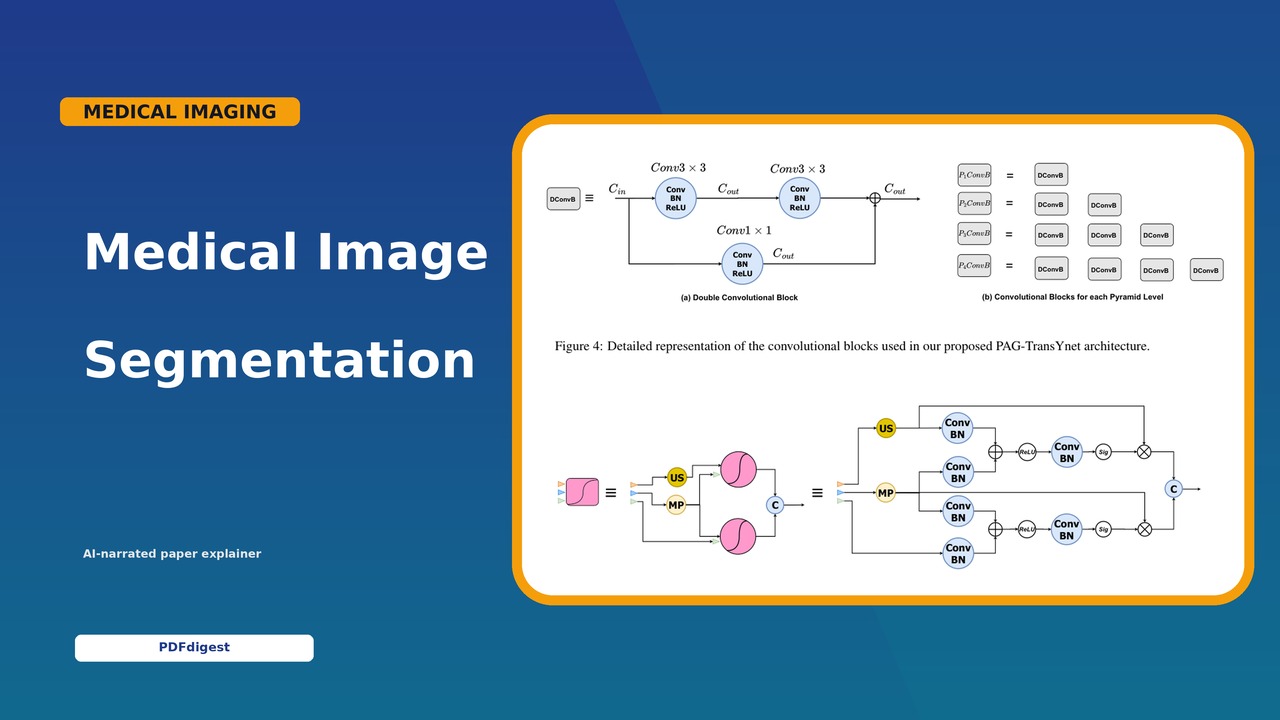
RETHINKING ATTENTION GATED WITH HYBRID DUAL PYRAMID TRANSFORMER-CNN FOR GENERALIZED SEGMENTATION IN MEDICAL IMAGING A PREPRINT
This paper presents a new method for segmenting medical images using a combination of CNNs and Transformers. The approach aims to improve the accuracy and efficiency of identifying different parts of medical images, which…Source: Fares Bougourzi, Fadi Dornaika, Abdelmalik Taleb-AhmedRead full explanation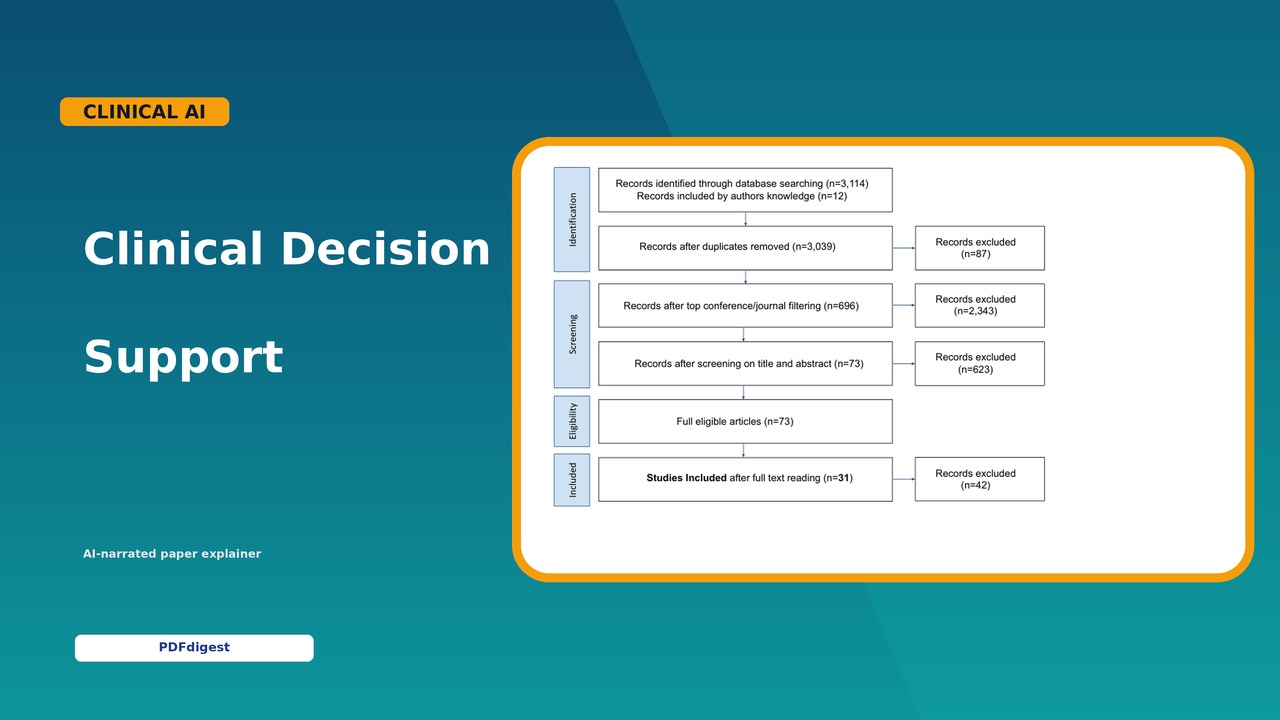
A Survey on Human-Centered Evaluation of Explainable AI Methods in Clinical Decision Support Systems
This paper reviews how explainable AI methods are evaluated in clinical decision support systems, emphasizing the importance of making AI understandable for healthcare professionals.Source: Alessandro Gambetti, Qiwei Han, Hong ShenRead full explanation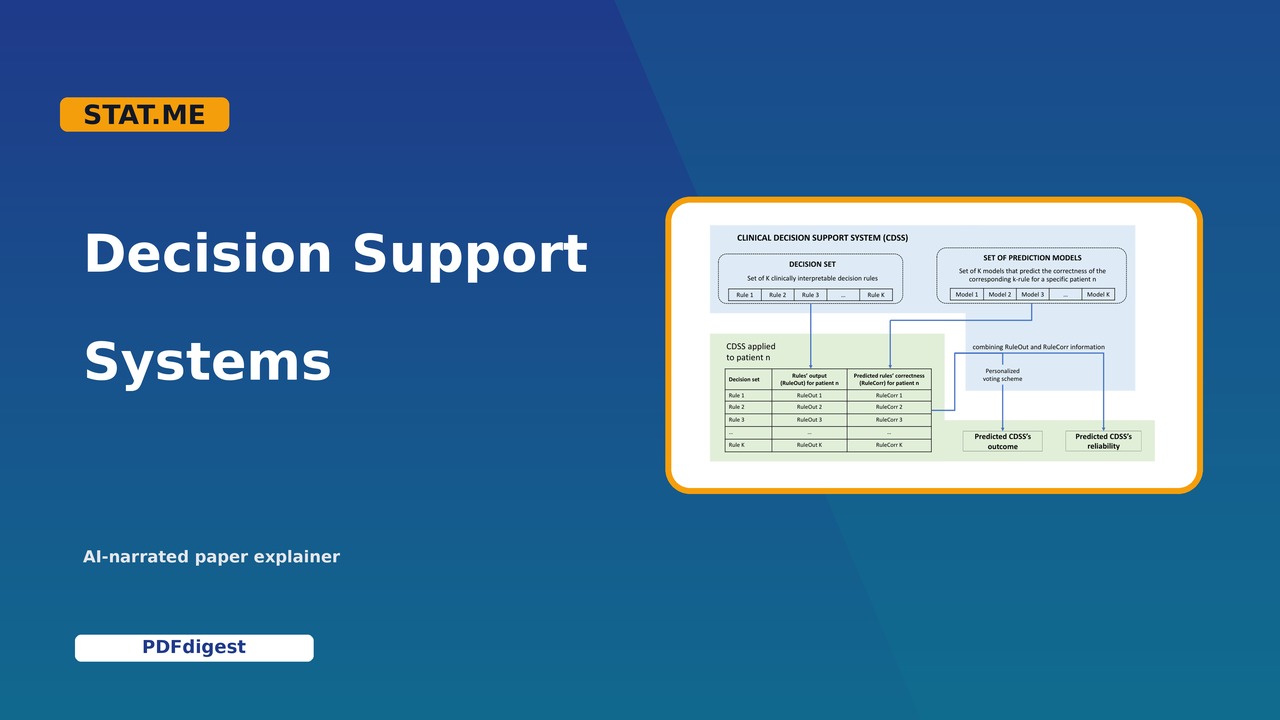
Clinical Support Systems Maps Personalized and Reliable Decision
This paper discusses a new system that helps doctors make better decisions by using rules and machine learning to understand patient data. It aims to make these decisions clearer and more trustworthy.Source: Francisco Valente, Simão Paredes, Jorge HenriquesRead full explanation
Workshop Camera Traps, AI and Ecology Compare transformers and convolutional models Comparison between transformers and convolutional models for fine-grained classification of insects
This paper explores how different AI models can help identify insect species, which is important for understanding biodiversity. It compares traditional convolutional models with newer transformer models to see which performs better.Source: Rita Pucci, Vincent J Kalkman, Dan StowellRead full explanation
An Algorithm Board in Neural Decoding
This paper investigates how the brain processes information and how we can decode that information using advanced algorithms. It highlights a new method that improves the accuracy of predictions about movements based on brain…Source: Jingyi Feng, Kai YangRead full explanation
The “teapot in a city”: a paradigm shift in urban climate modeling
This paper discusses how urban areas are affected by climate change and presents new methods for modeling these effects to help improve city designs and reduce energy consumption.Source: Najda Villefranque, Frédéric Hourdin, Louis D'alenc ¸onRead full explanation
Exploring Hierarchy-Aware Inverse Reinforcement Learning
This paper presents a new approach to understanding how humans make decisions by using a model that considers the hierarchical nature of planning. It shows that this model can better predict human goals compared…Source: Chris J Cundy, Daniel FilanRead full explanation
NIVA Brings A Multimodal Foundation Model for into Focus
This paper introduces NIVA, a new AI model that helps improve weather and climate predictions by understanding how different parts of the Earth system interact. It focuses on the ocean and atmosphere to make…Source: Anisha Pal, Aodhan Sweeney, Kyle HeyblomRead full explanation
Clinical Decision Support System for Unani Medicine Practitioners
This paper presents a new online system designed to help practitioners of Unani Medicine diagnose diseases more effectively. It uses advanced technology to analyze patient symptoms and suggest possible illnesses, making it easier for…Source: Haider Sultan, Hafiza Farwa Mahmood, Noor FatimaRead full explanation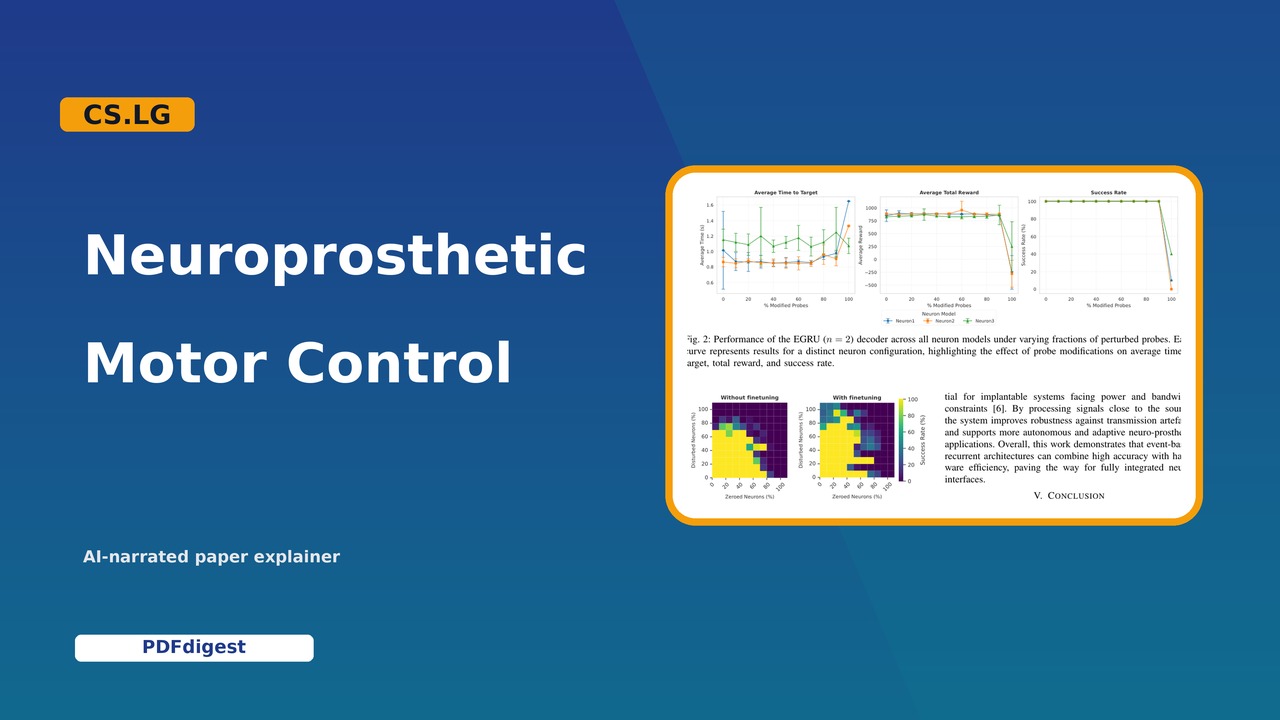
Neuroprosthetic Motor Brings Event-based Neural Decoding for into Focus
This paper discusses a new method for controlling prosthetic limbs using brain signals. The method is designed to be efficient and responsive, making it suitable for real-time use.Source: Khaleelulla Khan Nazeer, Sirine Arfa, Matthias JobstRead full explanation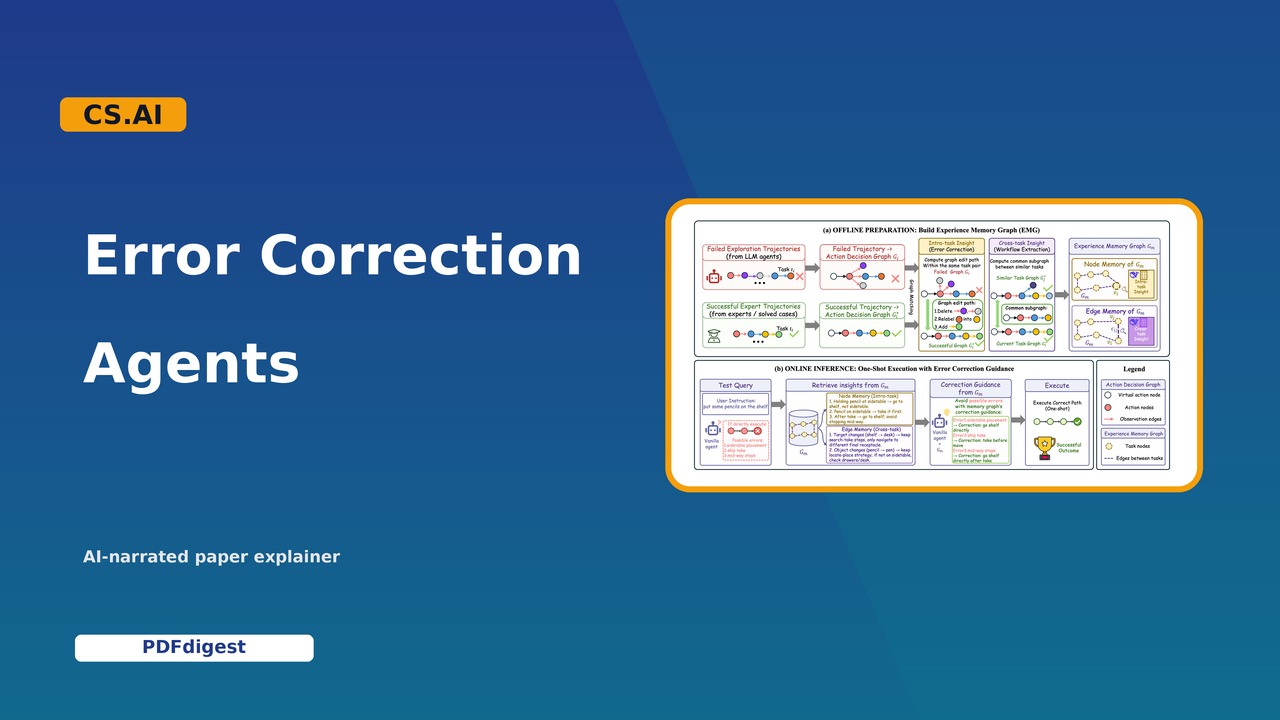
Error Correction Agents Maps Experience Memory Graph: One-Shot
This paper introduces a new method for helping AI agents learn from their mistakes more effectively. Instead of relying on trial-and-error, the proposed system uses a structured approach to remember and correct errors, leading…Source: Wenjun Wang, Yuchen Fang, Fengrui LiuRead full explanation
Generative Adversarial Maps Improving brain computer interface
This paper presents a new method to improve brain-computer interfaces by creating more training data using advanced machine learning techniques. This helps in better understanding brain signals and enhances the performance of these systems.Source: Qiqi Zhang, Ying LiuRead full explanation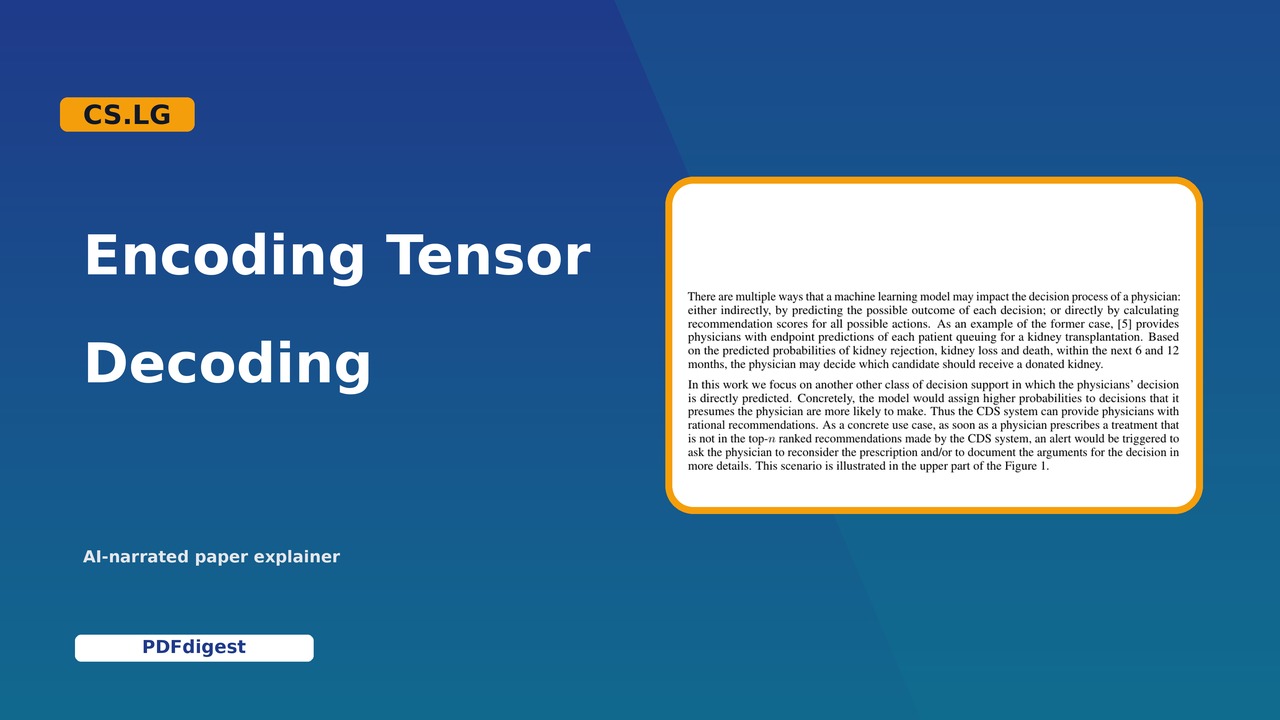
RNN Maps Predictive Clinical Decision Support
This paper discusses a new system that helps doctors make better treatment decisions for cancer patients by using advanced machine learning techniques. It combines different types of patient data to predict what treatments are…Source: Yinchong Yang, Peter A Fasching, Markus WallwienerRead full explanation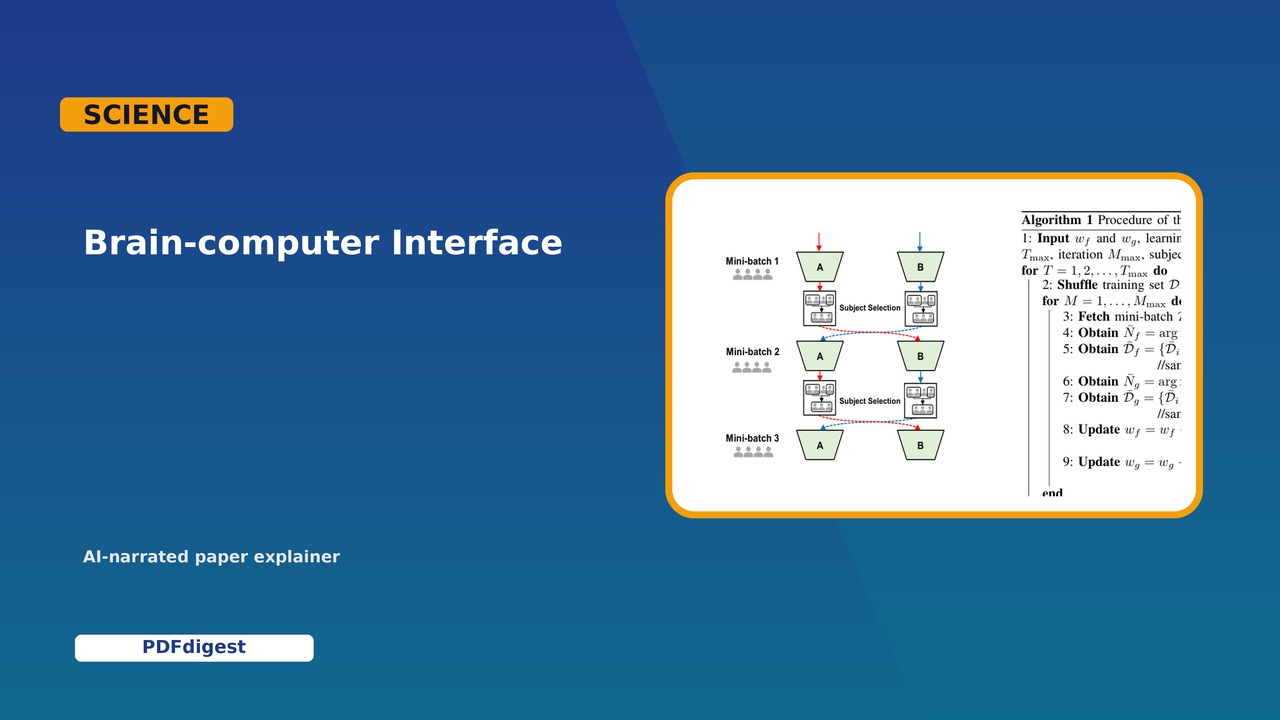
Confidence-Aware Subject-to-Subject Transfer Learning for Brain-Computer Interface
This paper presents a new method to improve brain-computer interfaces by using data from subjects who provide reliable signals, making the technology more effective and easier to use.Source: Dong-Kyun Han, Dong-Young Kim, Serkan MusellimRead full explanation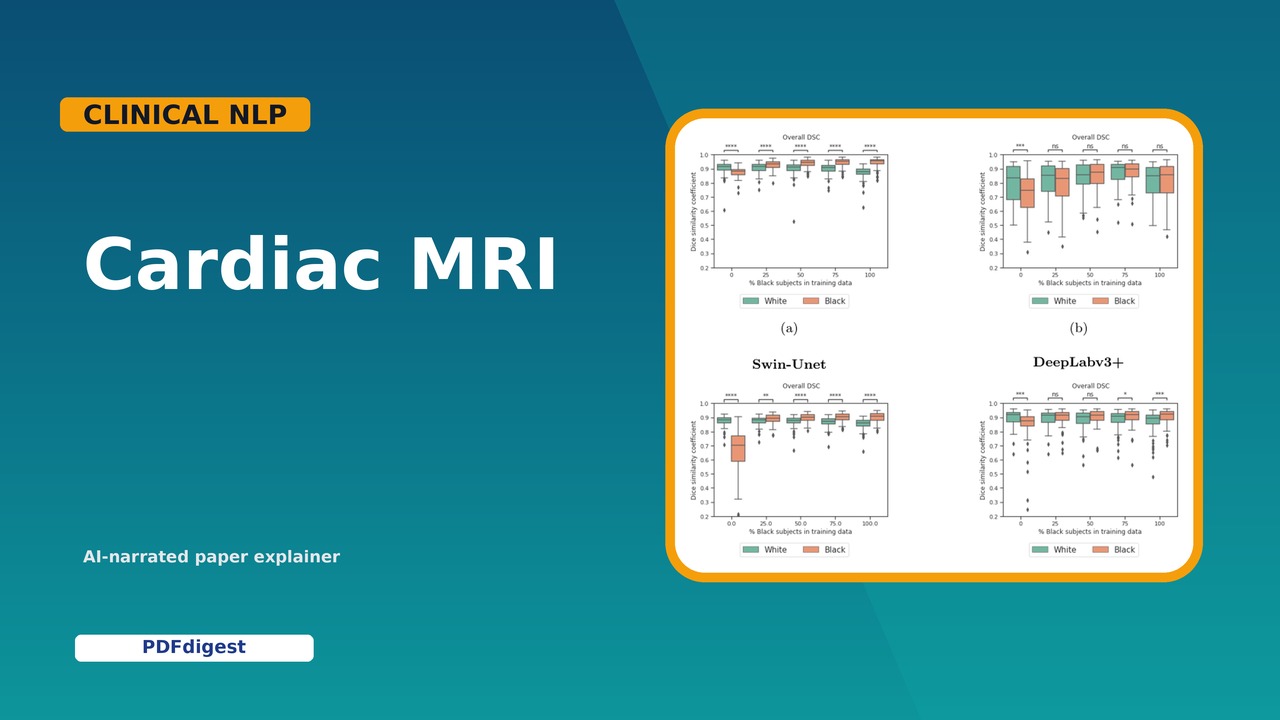
An investigation into the impact of deep learning model choice on sex and race bias in cardiac MR segmentation
This paper examines how different AI models can show bias based on sex and race when analyzing heart images. It highlights the importance of choosing the right model to ensure fair treatment in medical…Source: Tiarna Lee, Esther Puyol-Antón, Bram RuijsinkRead full explanation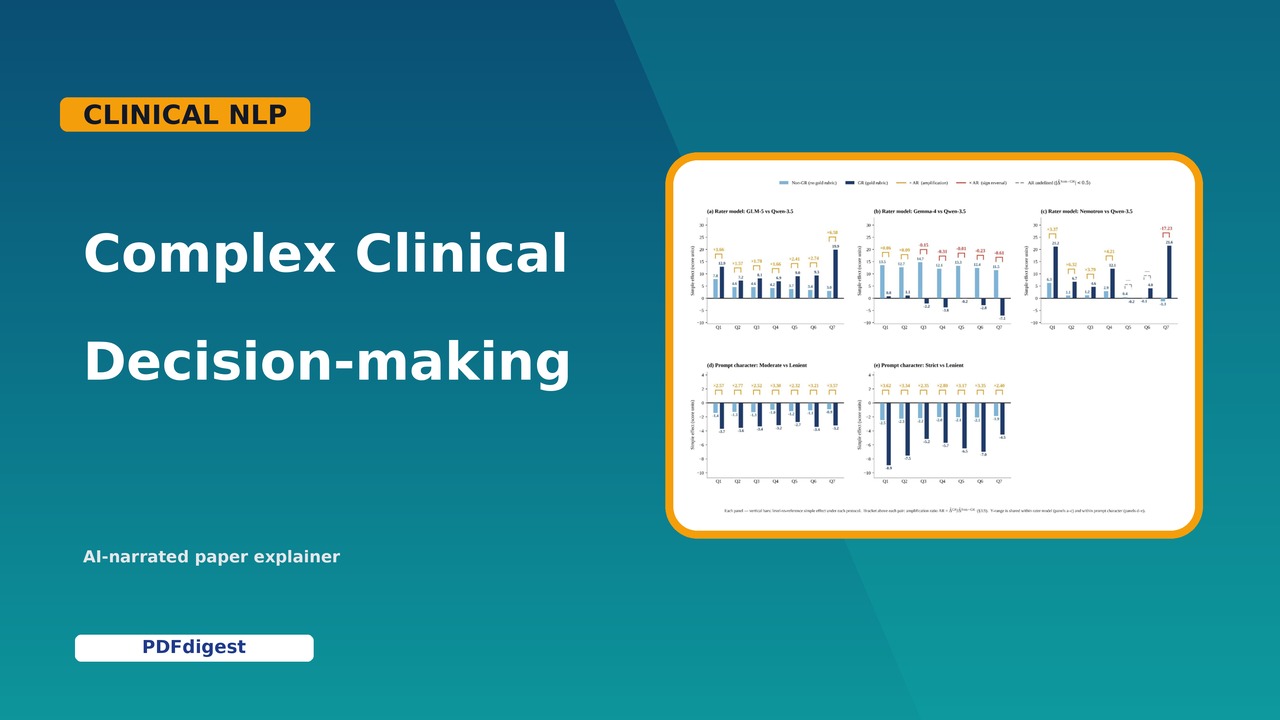
AI Rater Discrimination Depends on Scoring Protocol in Complex Clinical Decision-Making
This paper examines how AI systems, specifically large language models, evaluate clinical decisions in diabetes treatment. It highlights the differences in scoring based on the evaluation method used.Source: Sangwon Baek, Yeon Kyu, HurRead full explanation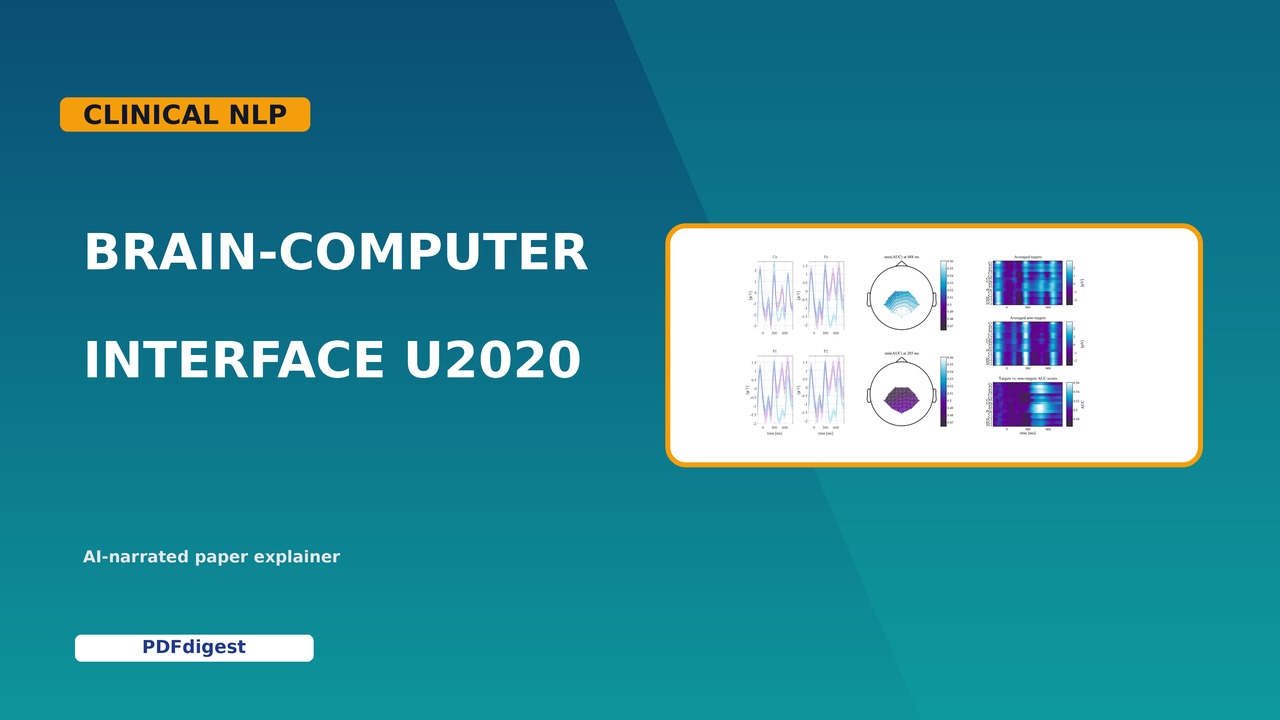
HEAD-RELATED IMPULSE RESPONSE-BASED SPATIAL AUDITORY BRAIN-COMPUTER INTERFACE †
This study explores a new way to help people with severe disabilities communicate using sound instead of sight. It tests a method that uses special audio cues to help users select letters and words.Source: Chisaki Nakaizumi, Toshie Matsui, Koichi MoriRead full explanation