R1-Onevision: Advancing Generalized Multimodal Reasoning through Cross-Modal Formalization
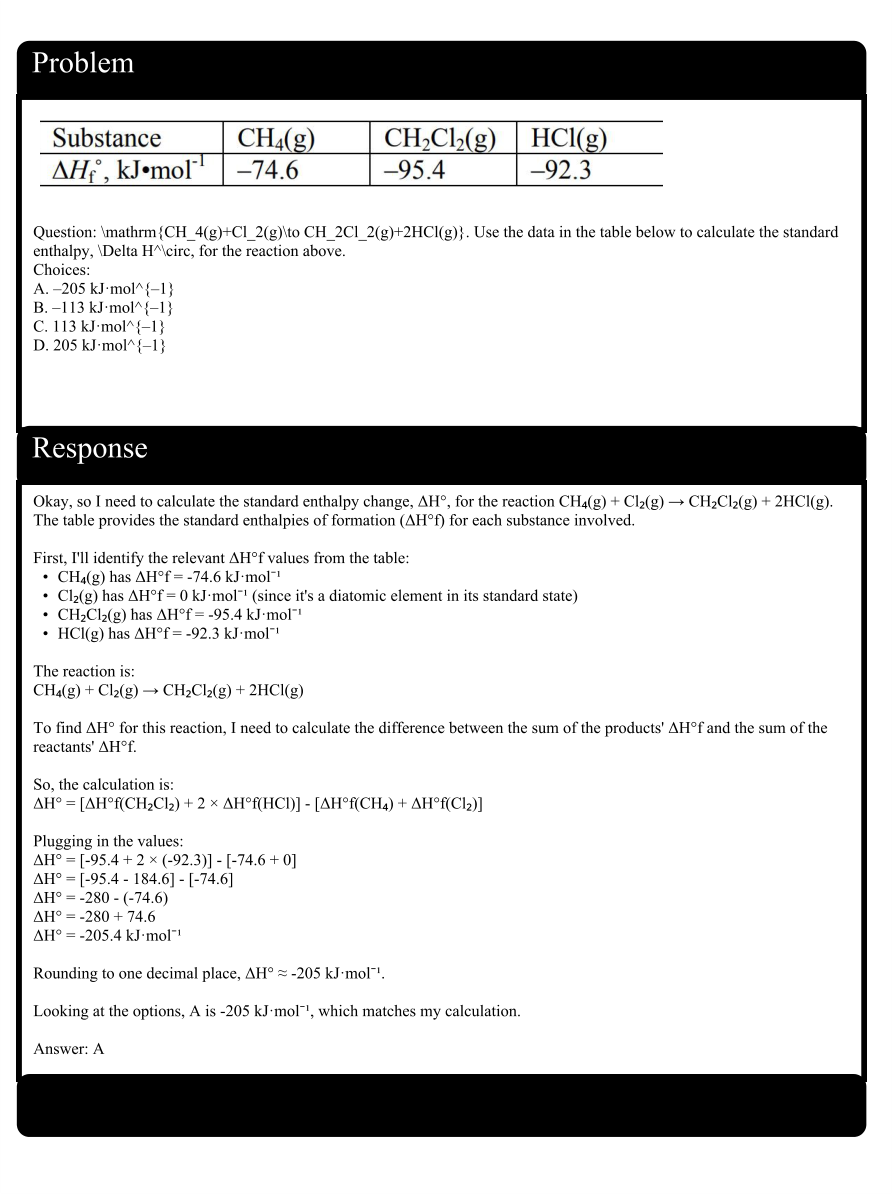
This paper presents a new model called R1-Onevision that helps computers understand and reason about images and text together. It aims to improve how machines can think about complex problems that involve both visual and written information.
Use the local video fallback
Content & Liability Disclaimer
This article and its accompanying video are automated summaries derived from R1-Onevision: Advancing Generalized Multimodal Reasoning through Cross-Modal Formalization by Yi Yang, Xiaoxuan He, Hongkun Pan, Xiyan Jiang, Yan Deng, Xingtao Yang, Haoyu Lu, Dacheng Yin, Fengyun Rao, Minfeng Zhu, Bo Zhang, Wei Chen. The original research was conducted solely by the paper's authors; PDFdigest did not conduct any of the research and makes no claims of ownership over the underlying scientific work.
The video narration is generated by artificial intelligence and references the paper's authors for attribution. The video is not narrated by any of the paper's authors. This content may contain inaccuracies, omissions, or misinterpretations of the original research. First-person language (e.g., "we found", "our results") reflects the original authors' voice, not PDFdigest's. Always read the original paper for accurate, verified information before making any decisions based on this content.
This content is provided "as is" without any warranties, express or implied. Simulated systems OÜ, its officers, directors, employees, and agents shall not be liable for any direct, indirect, incidental, special, consequential, or punitive damages arising from your use of, reliance on, or access to this content, including but not limited to errors, omissions, or misinterpretations of the original research. This disclaimer applies to the fullest extent permitted by applicable law.
- 1 While some more challenging datasets, like HumanEval-V , Humanity's Last Exam , and ZeroBench , aim to assess complex diagram understanding or broader knowledge proficiency.
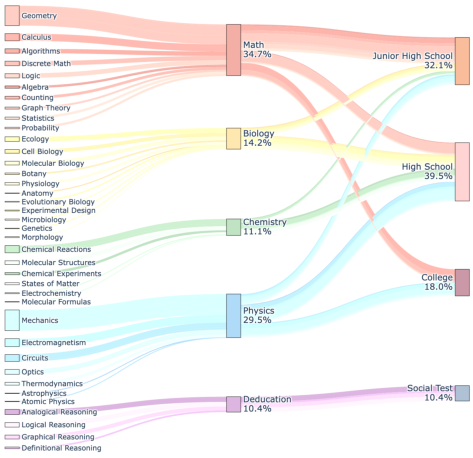
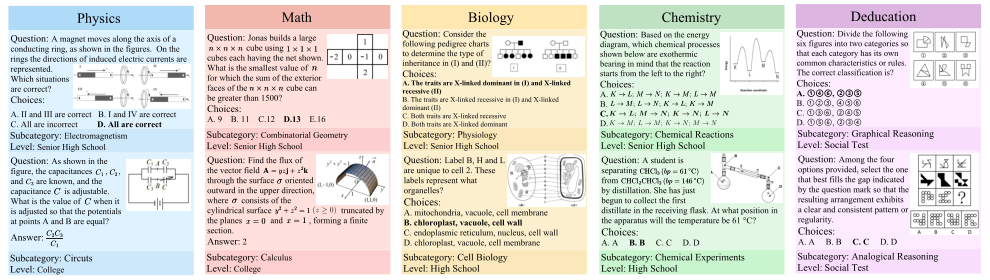
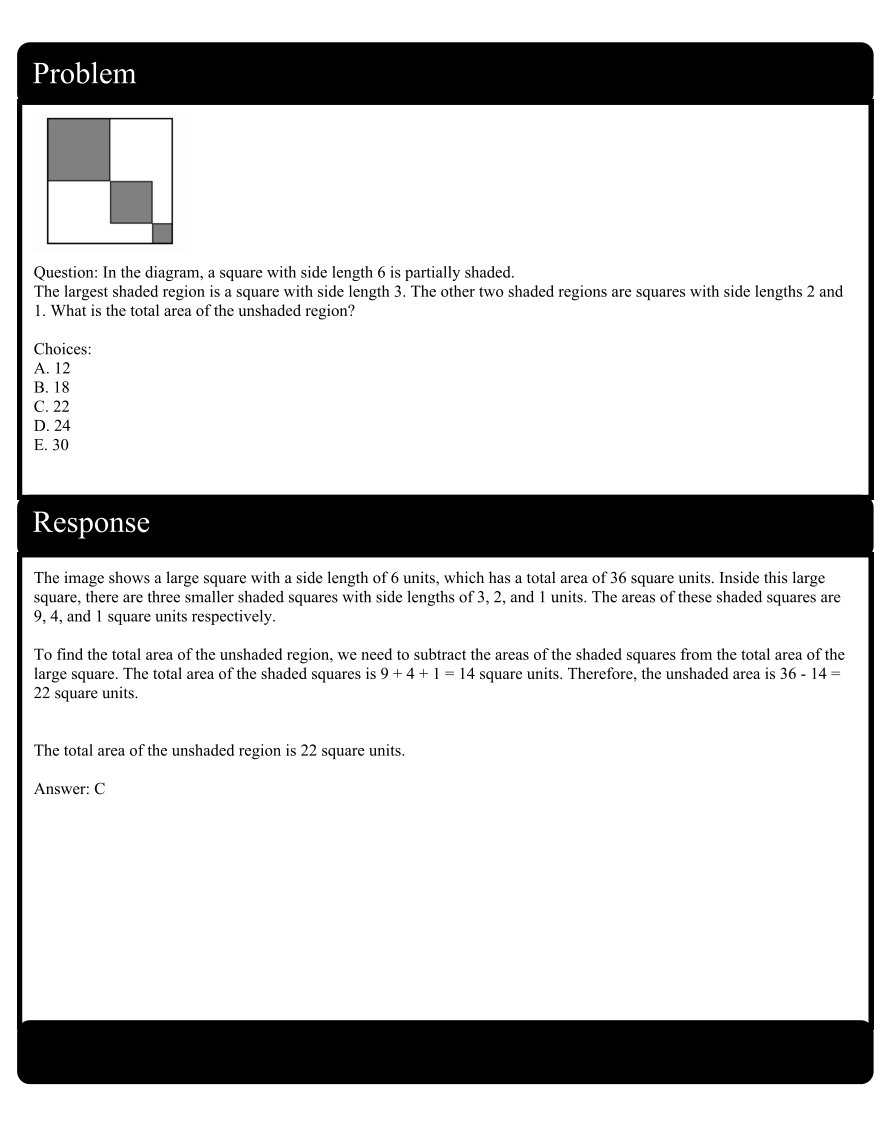
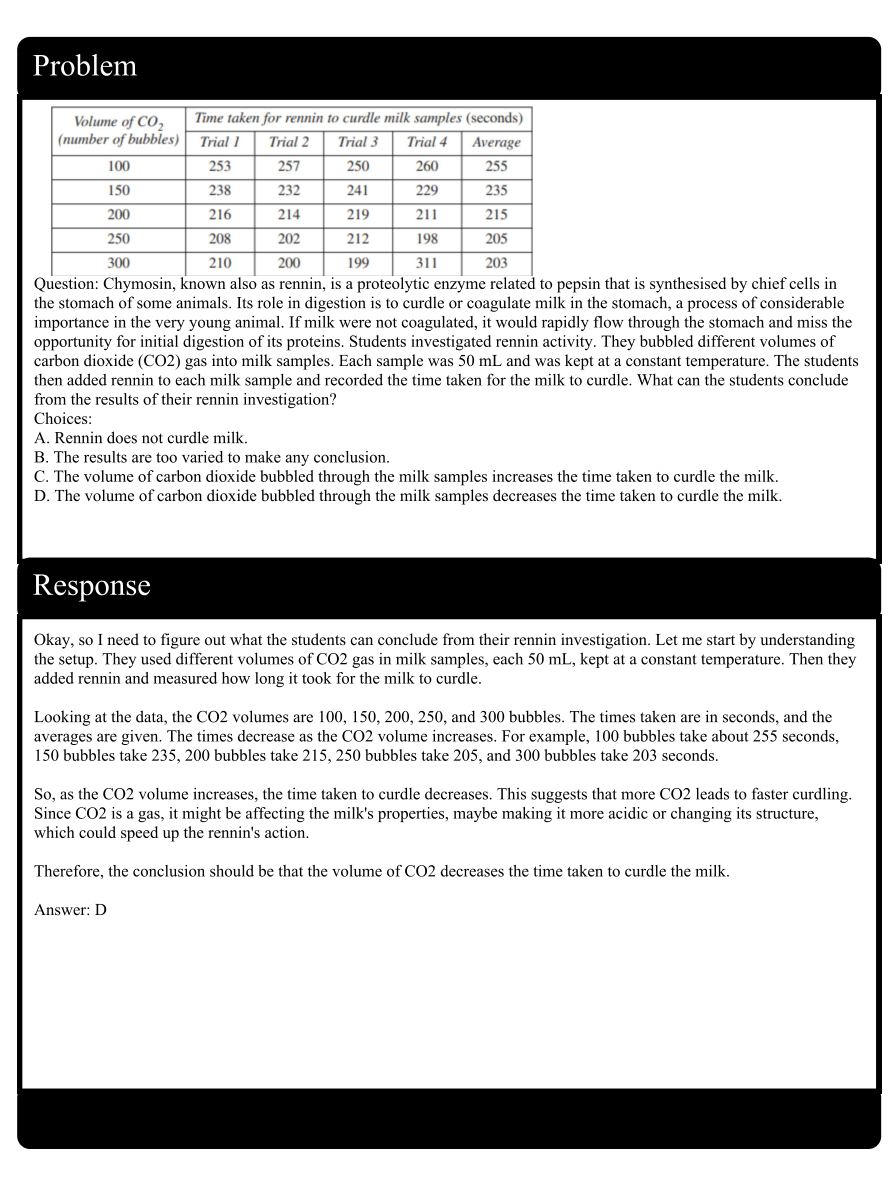
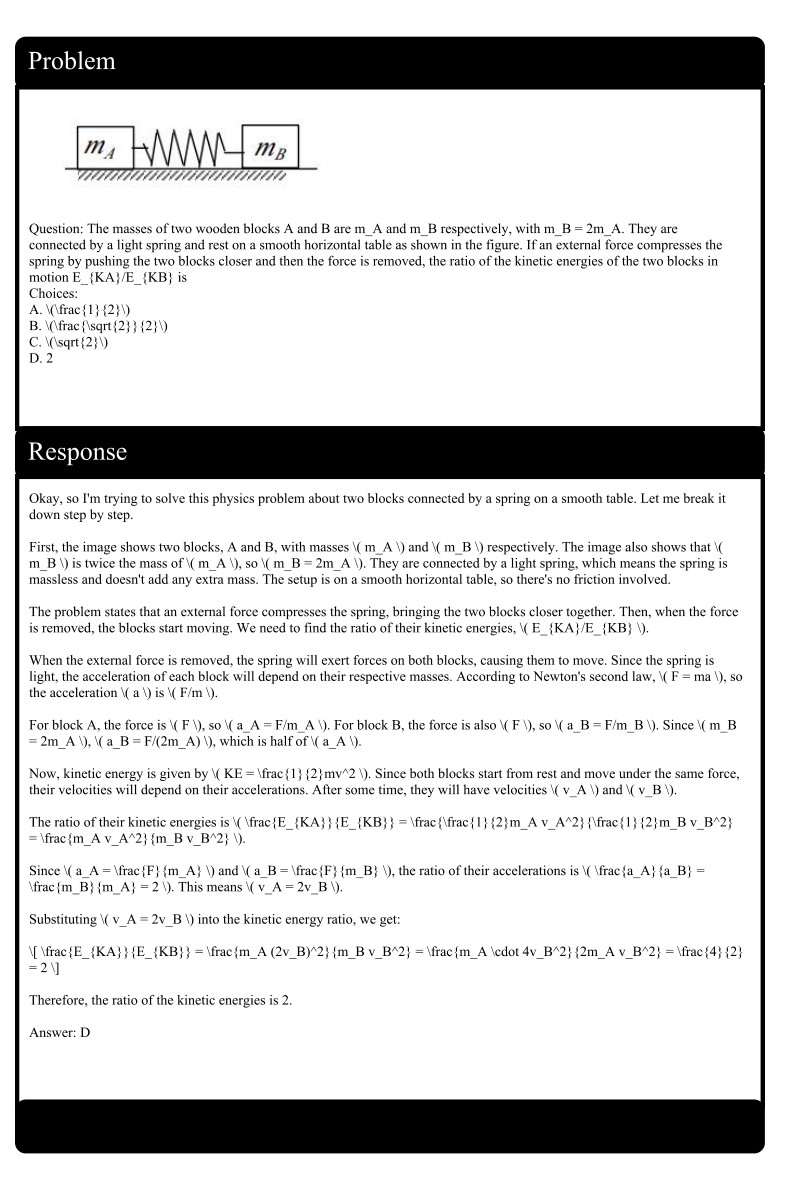
- 2 Third, to evaluate multimodal reasoning model, we introduce R1-Onevision-Bench, a comprehensive benchmark explicitly designed to evaluate "grade-level" reason-ing performance across scientific domains in the human educational system: mathematics, physics, chemistry, biology, and logical deduction.
- 3 Based on LLaVA-CoT, LlamaV-o1 introduces a multi-step curriculum learning approach, where tasks are progressively organized to facilitate incremental skill acquisition and problem-solving.
- 4 With the advancement of model capabilities in visual reasoning, an increasing number of studies have proposed various benchmarks to evaluate the reasoning abilities of these models .
Introduction
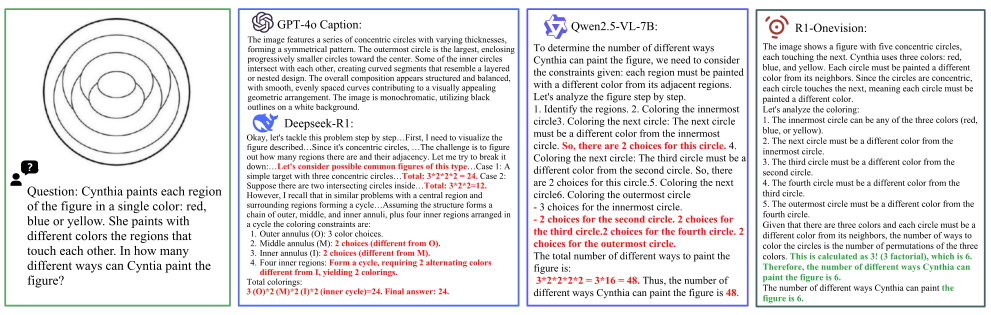
Thus, the number of different ways Cynthia can paint the figure is . So, there are 2 choices for this circle. -2 choices for the second circle.
2 choices for the third circle.2 choices for the fourth circle.
48 Question: Cynthia paints each region of the figure in a single color: red, blue or yellow.
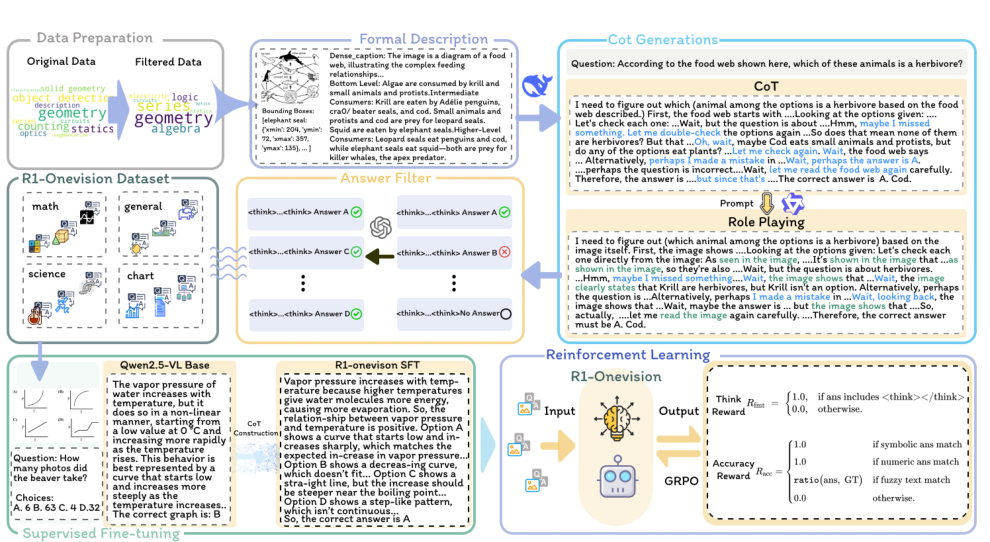
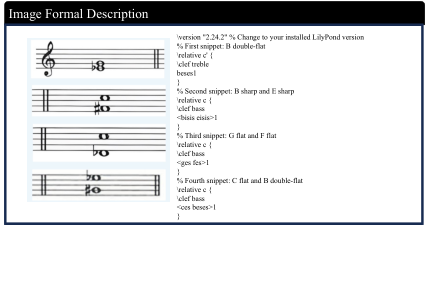
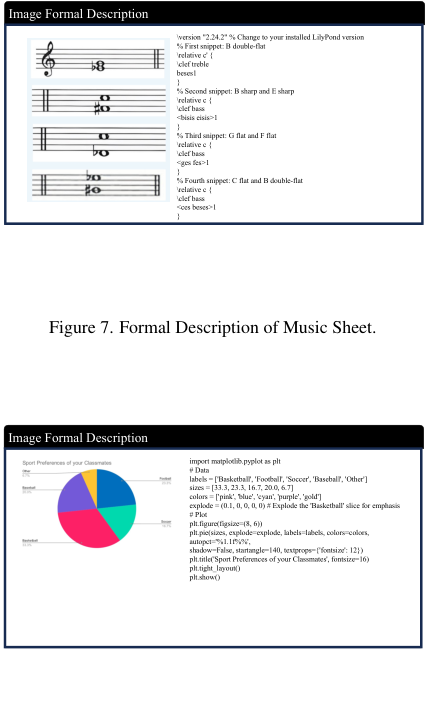
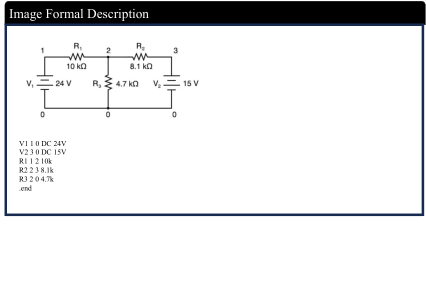
To address this limitation, we propose a Role-Playing strategy that emulates human-like visual comprehension.
However, these benchmarks remain specialized, covering only limited aspects of reasoning.
Research Question
While some more challenging datasets, like HumanEval-V , Humanity’s Last Exam , and ZeroBench , aim to assess complex diagram understanding or broader knowledge proficiency.
Methodology
This method involves iteratively revisiting the image, refining its understanding, and enhancing the fidelity of the reasoning process. Additionally, Section 5.3 provides an in-depth analysis of the areas where these models exhibit weaknesses, identifying specific challenges and limitations that hinder their effectiveness.
Study Design
Finally, Section 5.4 conducts a systematic analysis to evaluate the importance of various components during the training process.
We adopt Qwen2.5-VL series as baseline models, and conduct experiments on baselines 3B and 7B to examine the effectiveness of our method.
How PDFdigest Helps You Understand Research
Instant Paper Analysis
Get structured summaries and key findings from dense PDFs in seconds.
Visual Explanations
Turn complex methods, figures, and results into clearer visual breakdowns.
AI-Powered Q&A
Ask focused questions and get answers grounded in the paper.
Results & Findings
However, multimodal reasoning, which requires integrating visual and textual information, remains a significant challenge. Existing visual-language models often struggle to effectively analyze and reason visual content, resulting in suboptimal performance on complex reasoning tasks.
- However, multimodal reasoning, which requires integrating visual and textual information, remains a significant challenge.
- Existing visual-language models often struggle to effectively analyze and reason visual content, resulting in suboptimal performance on complex reasoning tasks.
- In this paper, we introduce R1-Onevision, a multimodal reasoning model designed to bridge the gap between visual perception and deep reasoning.
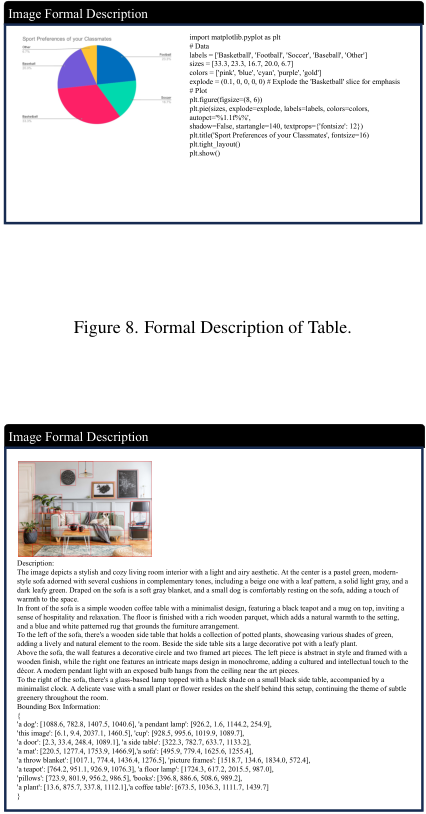
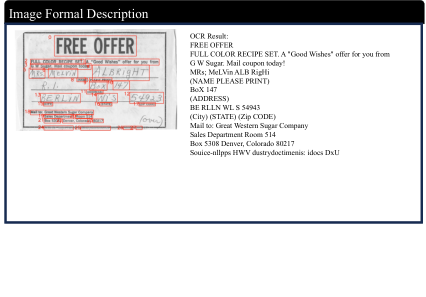
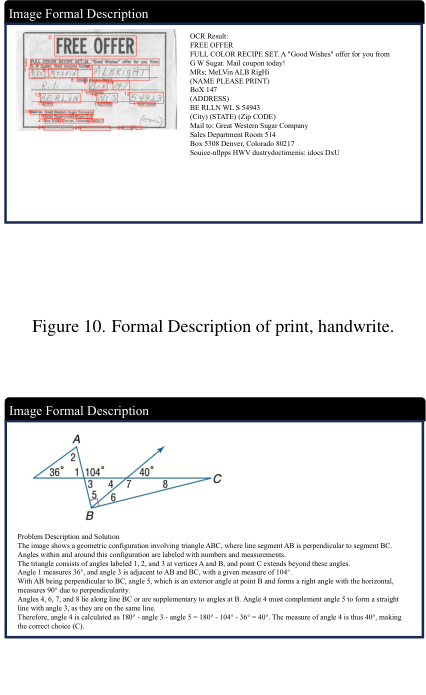
- To achieve this, we propose a cross-modal reasoning pipeline that transforms images into formal textural representations, enabling precise language-based reasoning.
- We further develop the R1-Onevision model through supervised fine-tuning and reinforcement learning.
The RL stage further encourages the model to generate reliable outputs and enhances the generalizability of the model.
Some approaches, such as LLava-CoT and Llama-V-o1 , employ a predefined thinking structure to constrain the model’s reasoning process, limiting its robustness and creative potential. While such structured templates improve consistency, they often lead to shallow reasoning with limited comprehension.
Practical Applications
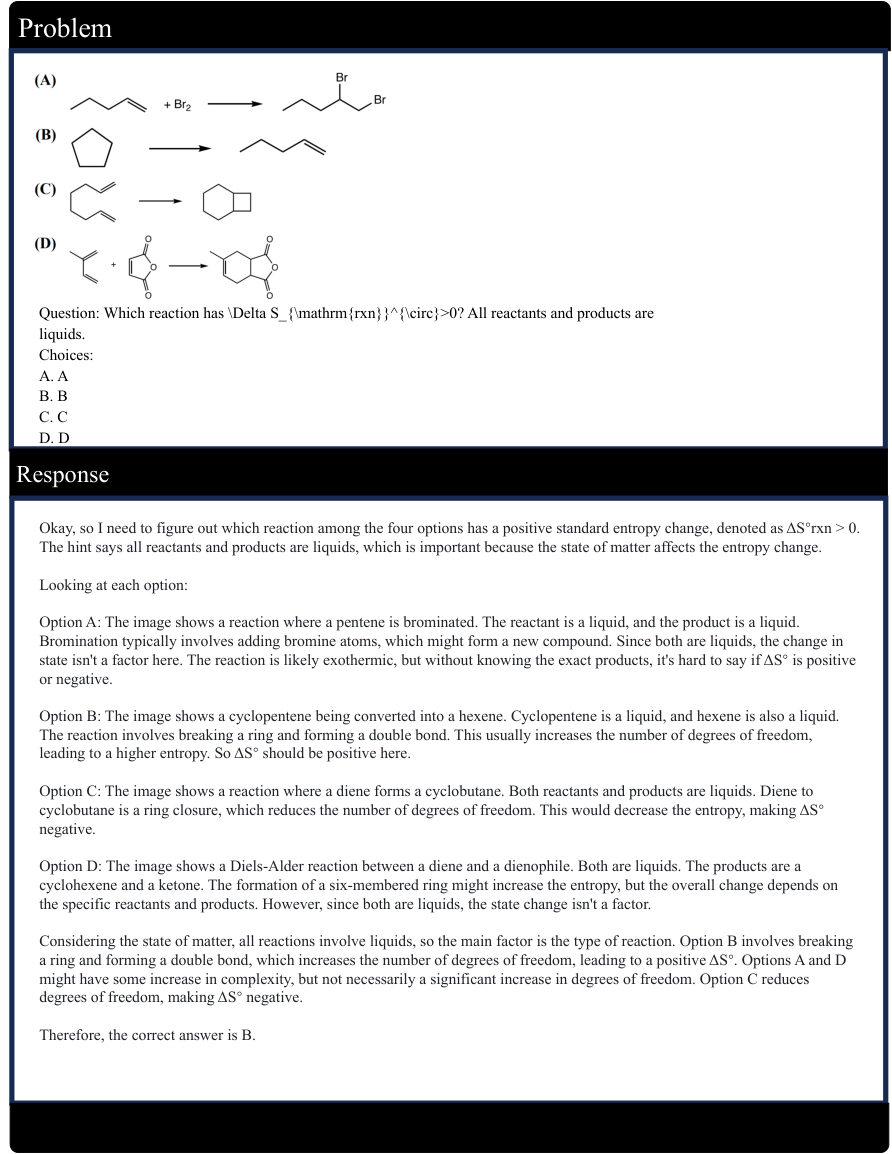
Consequently, these models may fail to generalize beyond their training distributions. Bromination typically involves adding bromine atoms, which might form a new compound.
R1-Onevision Dataset
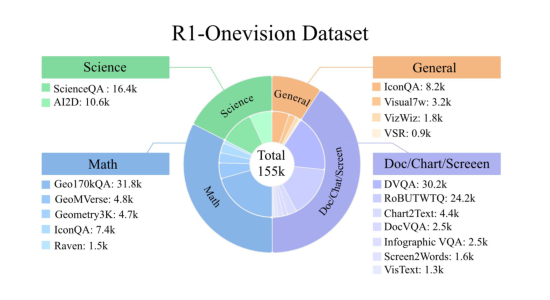
The R1-Onevision dataset is described as a resource providing step-by-step multimodal reasoning annotations, which is crucial for training and evaluating multimodal reasoning models.
Source Paper Figures and Captions
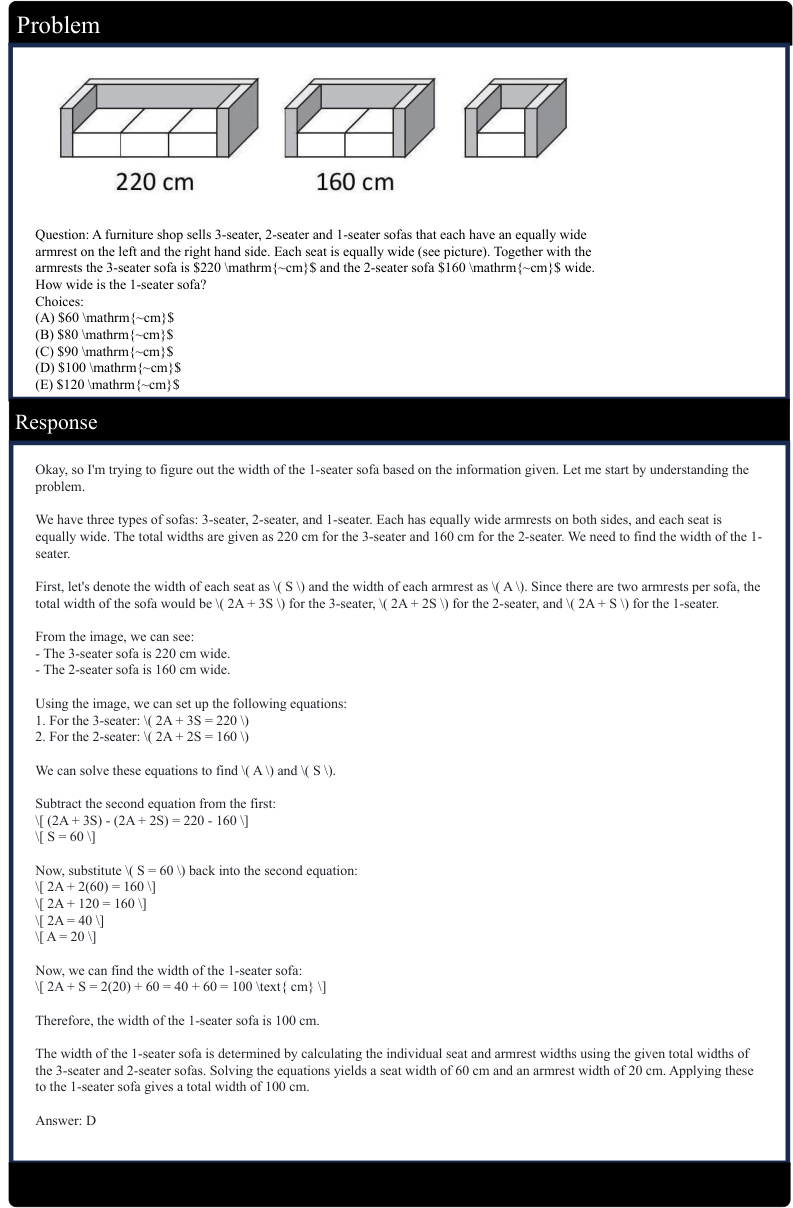
![For the 3-seater: \( 2A + 3S = 220 \) 2. For the 2-seater: \( 2A + 2S = 160 \) We can solve these equations to find \( A \) and \( S \). Subtract the second equation from the first: \[ (2A + 3S) -(2A + 2S) = 220 -160 \] \[ S = 60 \] Now, substitute \( S = 60 \) back into the second equation: \[ 2A + 2(60) = 160 \] \[ 2A + 120 = 160 \] \[ 2A = 40 \] \[ A = 20 \] Now, we can find the width of the 1-seater sofa: \[ 2A + S = 2(20) + 60 = 40 + 60 = 100 \text{ cm} \]](https://pdfdigest.com/wp-content/uploads/nala/output/paper_4b8bt-V0se-c5oZY_figure_13.png)
Frequently Asked Questions
Given that there are three colors and each circle must be a different color from its neighbors, the number of ways to color the circles is the number of permutations of the three colors. While some more challenging datasets, like HumanEval-V .
This method involves iteratively revisiting the image, refining its understanding, and enhancing the fidelity of the reasoning process. Finally, Section 5.4 conducts a systematic analysis to evaluate the importance of various components during the training process.
Third, to evaluate multimodal reasoning model, we introduce R1-Onevision-Bench, a comprehensive benchmark explicitly designed to evaluate “grade-level” reason-ing performance across scientific domains in the human educational system: mathematics, physics, chemistry, biology, and logical deduction. Based on LLaVA-CoT, LlamaV-o1 introduces a multi-step curriculum.
Therefore, the number of different ways Cynthia can paint the figure is 6. the figure is 6. To further maintain closeness to the reference distribution, a KL divergence penalty (weighted by β) is added, yielding the overall loss:.
Some approaches, such as LLava-CoT and Llama-V-o1 , employ a predefined thinking structure to constrain the model’s reasoning process, limiting its robustness and creative potential. While such structured templates improve consistency, they often lead to shallow reasoning with limited comprehension. The RL.
This paper presents a new model called R1-Onevision that helps computers understand and reason about images and text together. It aims to improve how machines can think about complex problems that involve both visual and written information.