AIRBORNE ULTRASONIC TACTILE DISPLAY BRAIN-COMPUTER INTERFACE PARADIGM
This paper explores a new way to interact with computers using touchless technology that sends vibrations through the air to the skin. This could help people with disabilities communicate more easily.
Content & Liability Disclaimer
This article and its accompanying video are automated summaries derived from AIRBORNE ULTRASONIC TACTILE DISPLAY BRAIN-COMPUTER INTERFACE PARADIGM by Katsuhiko Hamada, Hiromu Mori, Hiroyuki Shinoda, Tomasz M Rutkowski. The original research was conducted solely by the paper's authors; PDFdigest did not conduct any of the research and makes no claims of ownership over the underlying scientific work.
The video narration is generated by artificial intelligence and references the paper's authors for attribution. The video is not narrated by any of the paper's authors. This content may contain inaccuracies, omissions, or misinterpretations of the original research. First-person language (e.g., "we found", "our results") reflects the original authors' voice, not PDFdigest's. Always read the original paper for accurate, verified information before making any decisions based on this content.
This content is provided "as is" without any warranties, express or implied. Simulated systems OÜ, its officers, directors, employees, and agents shall not be liable for any direct, indirect, incidental, special, consequential, or punitive damages arising from your use of, reliance on, or access to this content, including but not limited to errors, omissions, or misinterpretations of the original research. This disclaimer applies to the fullest extent permitted by applicable law.
- 1 The study introduces a new touchless method for brain-computer interfaces using ultrasonic waves.
- 2 This method is more hygienic and could prevent skin issues for users.
- 3 Results show that this new method can be as effective as traditional tactile methods.
Introduction
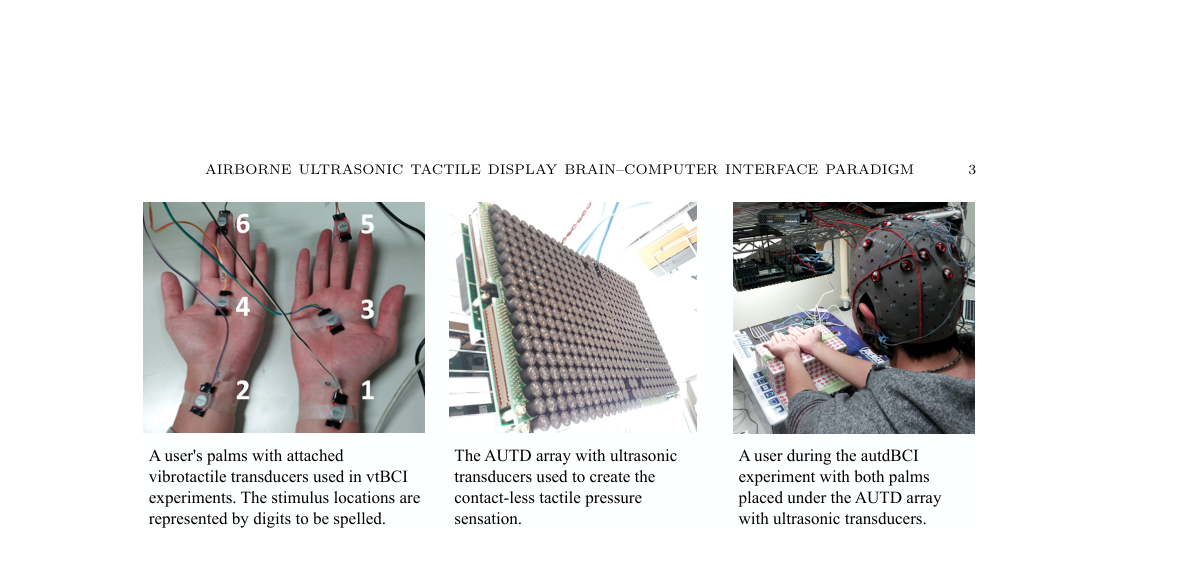
The introduction discusses the limitations of traditional BCIs that rely on visual or auditory stimuli and presents the AUTD as a hygienic alternative for tactile stimulation, particularly beneficial for patients in locked-in states.
Materials and Methods
Thirteen male volunteers participated in the study, which adhered to ethical guidelines. The AUTD generated tactile sensations through focused ultrasound, while a comparison was made with classical vibrotactile transducers.
Results
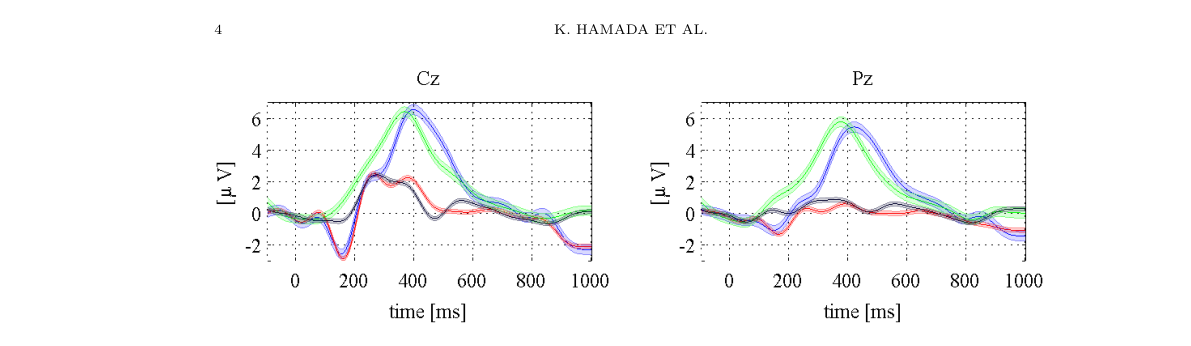
The results showed that the AUTD-based BCI achieved mean accuracies of 63.8% and 69.4% in different trials, with maximum accuracies of 78.3% and 84.6% compared to the classical method.
How PDFdigest Helps You Understand Research
Instant Paper Analysis
Get structured summaries and key findings from dense PDFs in seconds.
Visual Explanations
Turn complex methods, figures, and results into clearer visual breakdowns.
AI-Powered Q&A
Ask focused questions and get answers grounded in the paper.
Conclusions
The study concludes that AUTD can effectively serve as a tactile stimulus for BCI applications, with potential for further improvements in interfacing rates.
Source Paper Figures and Captions
Illustrates the brain responses to different stimuli, providing insight into the effectiveness of the tactile BCI.
Summarizes the accuracy of the BCI paradigms, highlighting the performance differences between AUTD and classical methods.
Frequently Asked Questions
This paper explores a new way to interact with computers using touchless technology that sends vibrations through the air to the skin. This could help people with disabilities communicate more easily.
The introduction discusses the limitations of traditional BCIs that rely on visual or auditory stimuli and presents the AUTD as a hygienic alternative for tactile stimulation, particularly beneficial for patients in locked-in.
Thirteen male volunteers participated in the study, which adhered to ethical guidelines. The AUTD generated tactile sensations through focused ultrasound, while a comparison was made with classical vibrotactile transducers.
Yes. PDFDigest can turn this paper into a structured explanation, key takeaways, visual summaries, and a narrated video when available.