HCIG: A Hierarchical Cross-Modal Incongruity Graph Network for Multimodal Sarcasm and Cyberbullying Detection
This paper presents a new method for detecting sarcasm and cyberbullying by analyzing both text and images together. The authors developed a framework that looks at how these two types of information interact and can signal different meanings.
Content & Liability Disclaimer
This article and its accompanying video are automated summaries derived from HCIG: A Hierarchical Cross-Modal Incongruity Graph Network for Multimodal Sarcasm and Cyberbullying Detection by Bhavana Verma, Priyanka Meel, Dinesh Kumar. The original research was conducted solely by the paper's authors; PDFdigest did not conduct any of the research and makes no claims of ownership over the underlying scientific work.
The video narration is generated by artificial intelligence and references the paper's authors for attribution. The video is not narrated by any of the paper's authors. This content may contain inaccuracies, omissions, or misinterpretations of the original research. First-person language (e.g., "we found", "our results") reflects the original authors' voice, not PDFdigest's. Always read the original paper for accurate, verified information before making any decisions based on this content.
This content is provided "as is" without any warranties, express or implied. Simulated systems OÜ, its officers, directors, employees, and agents shall not be liable for any direct, indirect, incidental, special, consequential, or punitive damages arising from your use of, reliance on, or access to this content, including but not limited to errors, omissions, or misinterpretations of the original research. This disclaimer applies to the fullest extent permitted by applicable law.
- 1 No auxiliary losses are used; both rely solely on the classification objective.
- 2 MMSD2.0 was released to remove spurious textual cues from the benchmark.
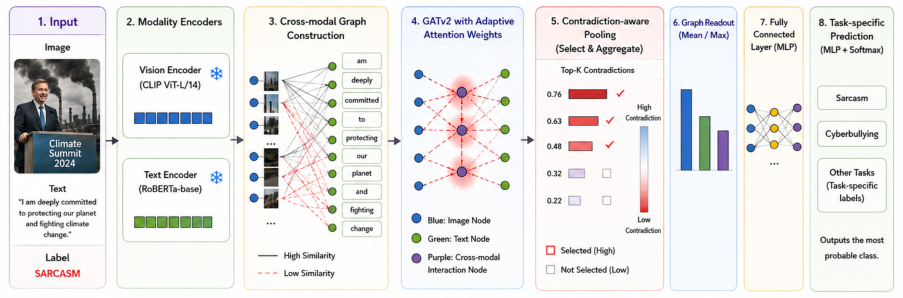
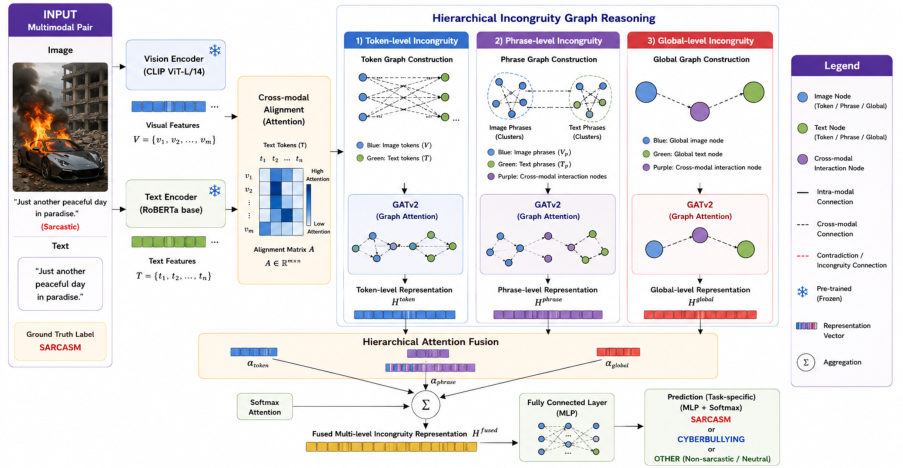
- 3 The goal is to predict labels by modeling cross-modal incongruity rather than relying only on fused representations.
- 4 Advancements in multimodal AI are expected to drive the next generation of content understanding systems.
Introduction
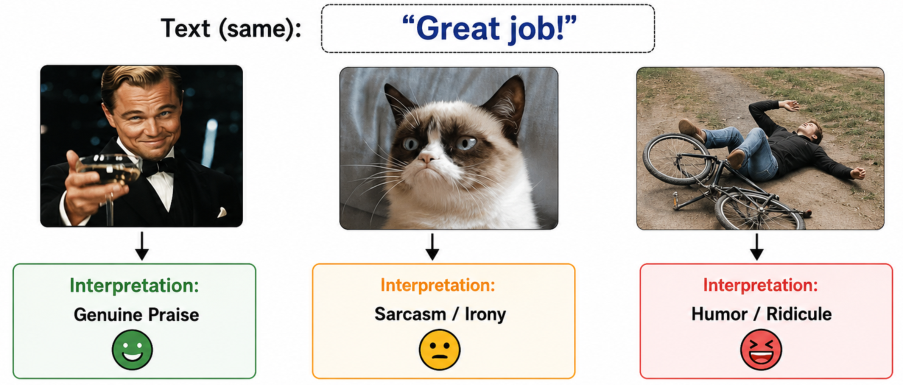
Sarcasm and cyberbullying are pragmatic phenomena signaled by both message content and presentation. A caption-image mismatch creates sarcasm, while a neutral-mocking image pairing creates bullying.
Text-only classifiers miss these examples because incongruity is observable only across modalities.
Multimodal cyberbullying datasets like MultiBully are recent developments drawing on multimodal hate-speech literature.
Methodology
Multimodal sentiment and emotion analysis literature informs the fusion and attention design choices used here. Attention-based frameworks have been proposed for multimodal sentiment analysis in memes.
Study Design
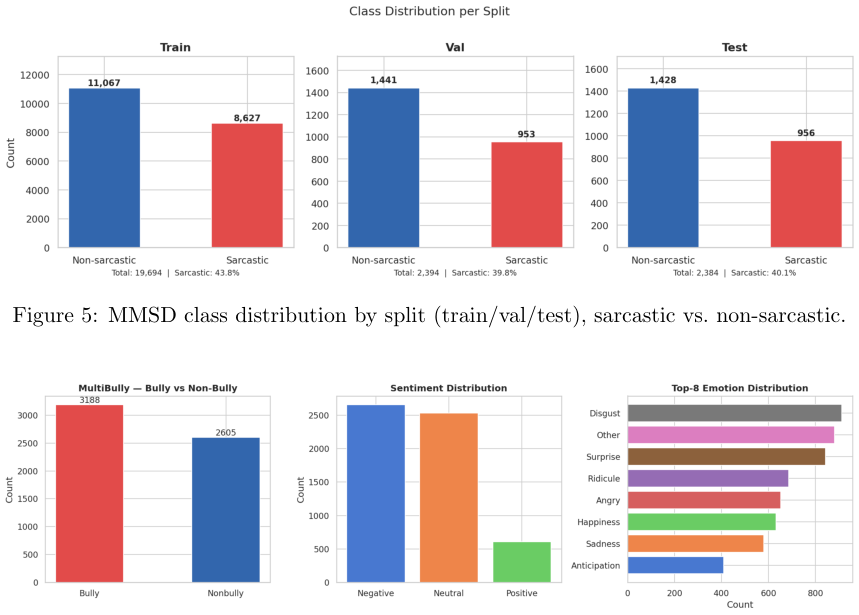
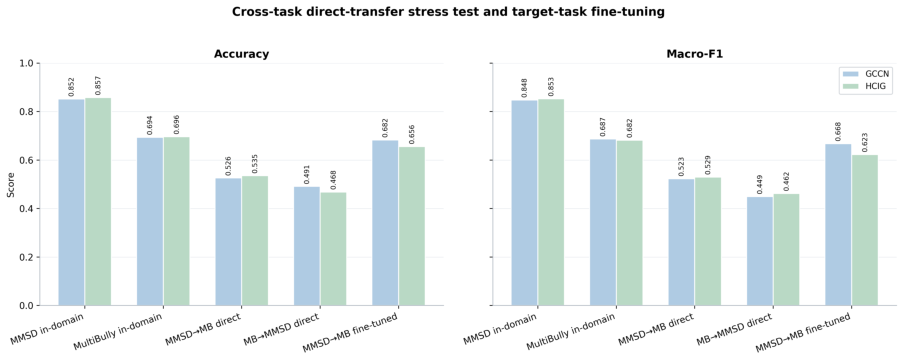
Three evaluation regimes are reported: in-domain MMSD, in-domain and fine-tuned MultiBully, and cross-task transfer.
The cross-task stress test applies models trained on one task directly to the other.
Results & Findings
This motivates multimodal approaches that explicitly model the relationship between textual and visual signals. Multimodal sarcasm detection uses the MMSD benchmark and methods that explicitly capture incongruity.
- This motivates multimodal approaches that explicitly model the relationship between textual and visual signals.
- Multimodal sarcasm detection uses the MMSD benchmark and methods that explicitly capture incongruity.
- MMSD2.0 was released to remove spurious textual cues from the benchmark.
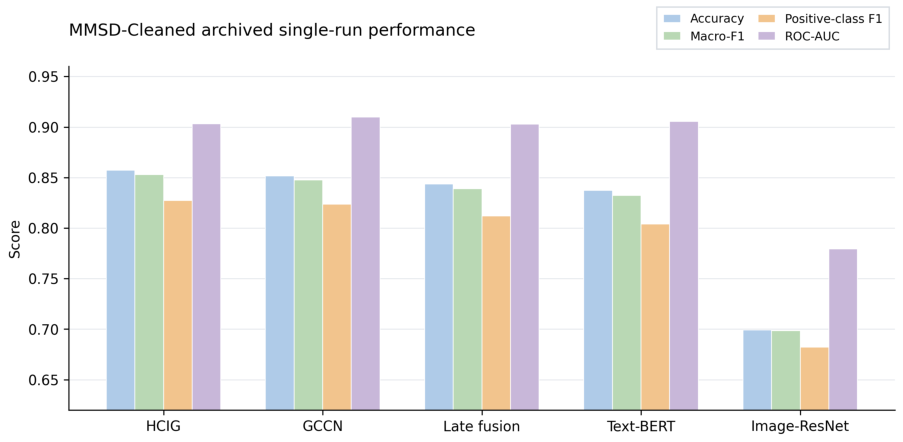
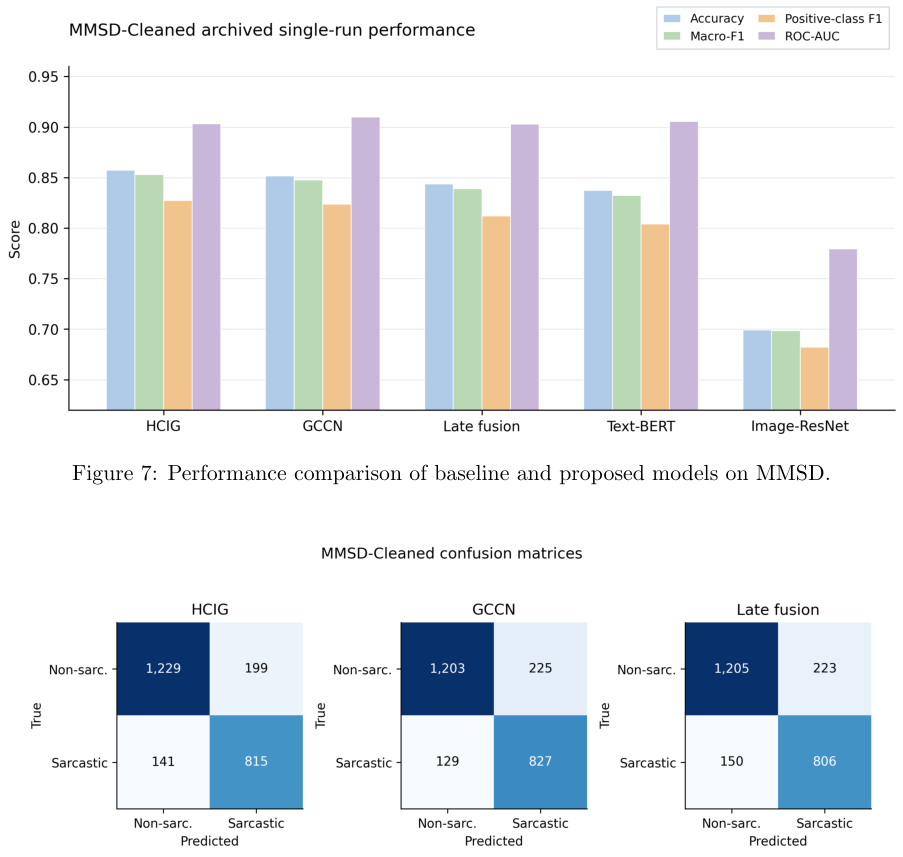
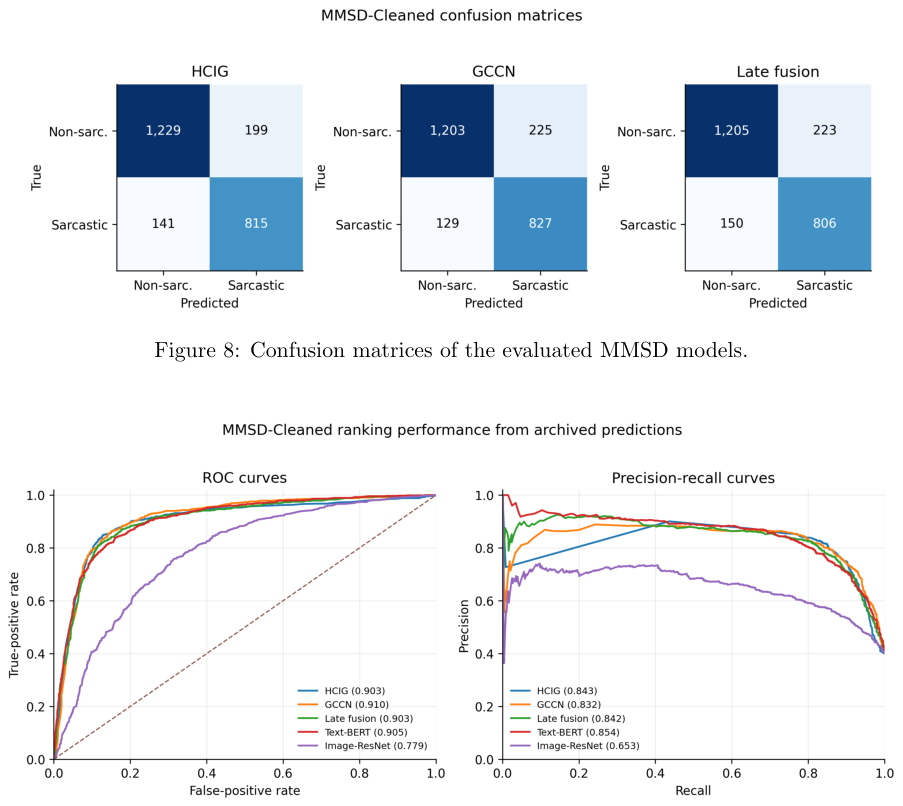
- We evaluate both architectures on MMSD and MultiBully using various training and transfer regimes.
- Cai et al. introduced the MMSD benchmark, and Qin et al. produced the corrected MMSD2.0.
MMSD2.0 was released to remove spurious textual cues from the benchmark.
The goal is to predict labels by modeling cross-modal incongruity rather than relying only on fused representations.
How PDFdigest Helps You Understand Research
Instant Paper Analysis
Get structured summaries and key findings from dense PDFs in seconds.
Visual Explanations
Turn complex methods, figures, and results into clearer visual breakdowns.
AI-Powered Q&A
Ask focused questions and get answers grounded in the paper.
Multimodal cyberbullying and hate-speech detection
This section discusses the transition from unimodal to multimodal approaches in cyberbullying detection, highlighting the MultiBully dataset and the challenges of detecting hate speech in memes.
Multimodal sentiment, emotion, and meme analysis
This part reviews broader literature on multimodal sentiment and emotion analysis, discussing the relevance of fusion strategies and graph neural networks in the context of the proposed models.
Limitations and Cautions
A useful limitation and caution is that this article summarizes the available paper text and extracted evidence; readers should consult the source paper before treating any interpretation as definitive.
The paper’s conclusions may depend on its source selection, definitions, assumptions, and the scope of its analysis, so follow-up reading is important.
Source Paper Figures and Captions
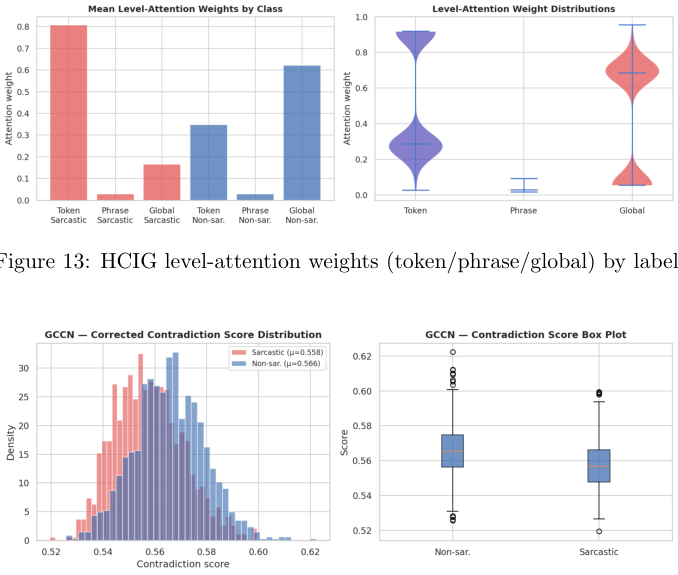
Frequently Asked Questions
The learned incongruity-aware representation is combined with unimodal representations and passed to a classification head. No auxiliary losses are used; both rely solely on the classification objective.
Three evaluation regimes are reported: in-domain MMSD, in-domain and fine-tuned MultiBully, and cross-task transfer. Models trained on one dataset were applied directly to the other without target-task training.
MMSD2.0 was released to remove spurious textual cues from the benchmark. The goal is to predict labels by modeling cross-modal incongruity rather than relying only on fused representations.
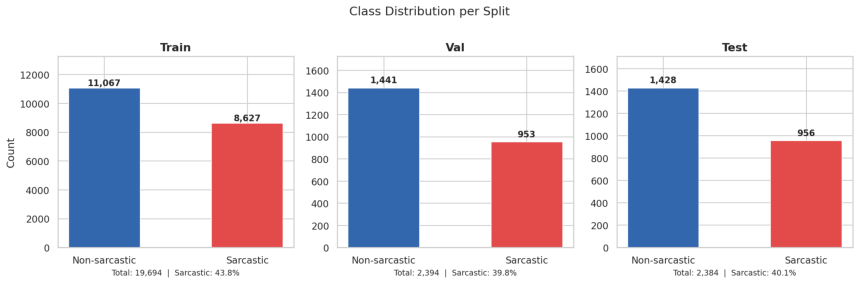
This asymmetry means the effective training set is smaller and may not match validation partitions.
This paper presents a new method for detecting sarcasm and cyberbullying by analyzing both text and images together. The authors developed a framework that looks at how these two types of information interact and can signal different meanings.
Yes. PDFDigest can turn this paper into a structured explanation, key takeaways, visual summaries, and a narrated video when available.