Task-relevant autoencoding enhances machine learning for human neuroscience
This paper introduces a new machine learning model called TRACE that helps researchers better understand how the brain represents information related to human behavior, even when they have limited data.
Content & Liability Disclaimer
This article and its accompanying video are automated summaries derived from Task-relevant autoencoding enhances machine learning for human neuroscience by Seyedmehdi Orouji, Vincent Taschereau-Dumouchel, Aurelio Cortese, Brian Odegaard, Cody Cushing, Mouslim Cherkaoui, Mitsuo Kawato, Hakwan Lau, Megan A K Peters. The original research was conducted solely by the paper's authors; PDFdigest did not conduct any of the research and makes no claims of ownership over the underlying scientific work.
The video narration is generated by artificial intelligence and references the paper's authors for attribution. The video is not narrated by any of the paper's authors. This content may contain inaccuracies, omissions, or misinterpretations of the original research. First-person language (e.g., "we found", "our results") reflects the original authors' voice, not PDFdigest's. Always read the original paper for accurate, verified information before making any decisions based on this content.
This content is provided "as is" without any warranties, express or implied. Simulated systems OÜ, its officers, directors, employees, and agents shall not be liable for any direct, indirect, incidental, special, consequential, or punitive damages arising from your use of, reliance on, or access to this content, including but not limited to errors, omissions, or misinterpretations of the original research. This disclaimer applies to the fullest extent permitted by applicable law.
- 1 TRACE is designed to work well with small datasets, which is common in human neuroscience.
- 2 It outperforms traditional methods in accurately classifying and representing neural data.
- 3 The model can help researchers extract meaningful insights from neuroimaging studies.
Introduction
The introduction discusses the challenges of using machine learning in human neuroscience, particularly the need for large datasets and the risk of overfitting with limited neuroimaging data. It introduces TRACE as a nonparametric method aimed at extracting task-relevant representations from high-dimensional datasets.
Results
The results section compares TRACE’s performance against standard autoencoders, variational autoencoders, and PCA across various metrics, demonstrating TRACE’s superiority in extracting relevant features and maintaining reconstruction fidelity.
Benchmarking TRACE's advantages, including under increasing data sparsity
This section evaluates TRACE’s performance under varying levels of data sparsity, showing that it maintains high reconstruction fidelity and classifier accuracy even with limited training samples.
How PDFdigest Helps You Understand Research
Instant Paper Analysis
Get structured summaries and key findings from dense PDFs in seconds.
Visual Explanations
Turn complex methods, figures, and results into clearer visual breakdowns.
AI-Powered Q&A
Ask focused questions and get answers grounded in the paper.
Comprehensive comparison across metrics as a function of increasing data sparsity
A detailed comparison of TRACE and other models at optimal bottleneck dimensionalities reveals TRACE’s effectiveness in extracting task-relevant information without sacrificing reconstruction quality.
Source Paper Figures and Captions
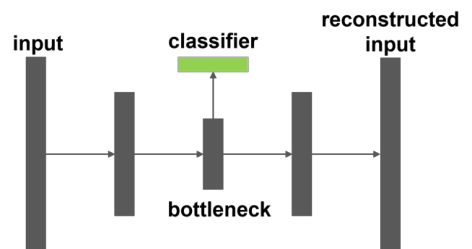
Demonstrates TRACE’s superior reconstruction quality and clarity across different classes.
Frequently Asked Questions
This paper introduces a new machine learning model called TRACE that helps researchers better understand how the brain represents information related to human behavior, even when they have limited data.
The introduction discusses the challenges of using machine learning in human neuroscience, particularly the need for large datasets and the risk of overfitting with limited neuroimaging data. It introduces TRACE as a.
The results section compares TRACE’s performance against standard autoencoders, variational autoencoders, and PCA across various metrics, demonstrating TRACE’s superiority in extracting relevant features and maintaining reconstruction fidelity.
Yes. PDFDigest can turn this paper into a structured explanation, key takeaways, visual summaries, and a narrated video when available.