Data-Driven Network Neuroscience: On Data Collection and Benchmark
This paper discusses a new collection of brain imaging data that can help researchers understand brain diseases better. It explains how brain images are processed to create useful datasets for studying conditions like Alzheimer's and Autism.
Content & Liability Disclaimer
This article and its accompanying video are automated summaries derived from Data-Driven Network Neuroscience: On Data Collection and Benchmark by Jiaxing Xu, Yunhan Yang, David Tse, Jung Huang, Sophi Shilpa Gururajapathy, Yiping Ke, Miao Qiao, Alan Wang, Haribalan Kumar, Josh Mcgeown, Eryn Kwon. The original research was conducted solely by the paper's authors; PDFdigest did not conduct any of the research and makes no claims of ownership over the underlying scientific work.
The video narration is generated by artificial intelligence and references the paper's authors for attribution. The video is not narrated by any of the paper's authors. This content may contain inaccuracies, omissions, or misinterpretations of the original research. First-person language (e.g., "we found", "our results") reflects the original authors' voice, not PDFdigest's. Always read the original paper for accurate, verified information before making any decisions based on this content.
This content is provided "as is" without any warranties, express or implied. Simulated systems OÜ, its officers, directors, employees, and agents shall not be liable for any direct, indirect, incidental, special, consequential, or punitive damages arising from your use of, reliance on, or access to this content, including but not limited to errors, omissions, or misinterpretations of the original research. This disclaimer applies to the fullest extent permitted by applicable law.
- 1 The study focuses on collecting and processing brain imaging data.
- 2 It aims to improve research on neurodegenerative diseases.
- 3 The datasets created are intended to be publicly accessible for further research.
Introduction
The introduction discusses the principles of neuroscience and the growing interest in network neuroscience, which uses graph models to understand brain connectivity. It highlights the importance of machine learning and graph analytics in clinical applications, particularly for identifying neurodegenerative conditions.
Dataset Sources: Raw Neuroimages
The paper details the sources of raw neuroimages used in the study, including the Autism Brain Imaging Data Exchange (ABIDE) and the Alzheimer’s Disease Neuroimaging Initiative (ADNI). It explains the significance of resting-state functional connectivity in detecting neurodegenerative conditions.
How PDFdigest Helps You Understand Research
Instant Paper Analysis
Get structured summaries and key findings from dense PDFs in seconds.
Visual Explanations
Turn complex methods, figures, and results into clearer visual breakdowns.
AI-Powered Q&A
Ask focused questions and get answers grounded in the paper.
From MRI Images to Brain Networks: Design Choices
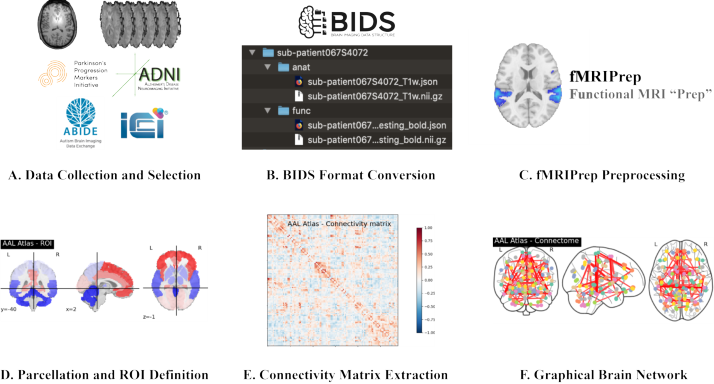
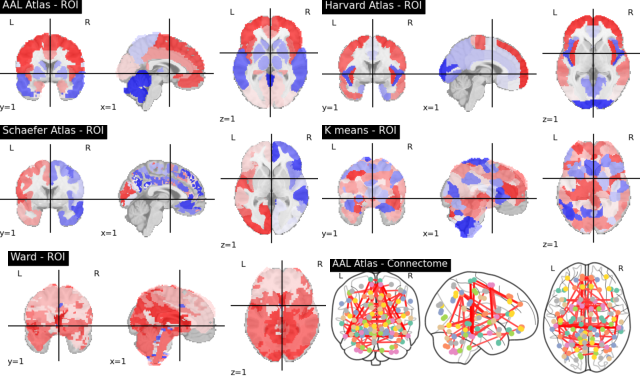
This section outlines the processing pipeline used to convert raw MRI images into brain networks, including data selection, preprocessing, and parcellation strategies. It emphasizes collaboration with domain experts to ensure quality and relevance.
Data Collection and Selection Criteria
The authors describe the criteria for selecting MRI images, focusing on quality and validity. They explain the inclusion of metadata and the handling of longitudinal study data, as well as the decision not to apply data harmonization techniques.
Source Paper Figures and Captions
Frequently Asked Questions
This paper discusses a new collection of brain imaging data that can help researchers understand brain diseases better. It explains how brain images are processed to create useful datasets for studying conditions like Alzheimer’s and Autism.
The introduction discusses the principles of neuroscience and the growing interest in network neuroscience, which uses graph models to understand brain connectivity. It highlights the importance of machine learning and graph analytics.
The study focuses on collecting and processing brain imaging data. It aims to improve research on neurodegenerative diseases. The datasets created are intended to be publicly accessible for further research.
Yes. PDFDigest can turn this paper into a structured explanation, key takeaways, visual summaries, and a narrated video when available.