Integrating bibliometrics and: Evidence from Predict Surgical Outcomes

This study explores how varicocele, a common condition affecting male fertility, can be treated surgically. It combines a review of existing research with new data from patients who underwent surgery to understand better how effective these treatments are.

Analyze with PDFdigest

Content & Liability Disclaimer

This article and its accompanying video are automated summaries derived from Integrating bibliometrics and real-world data to map varicocele research and predict surgical outcomes by Yu Zhou, Shenghui Zhu, Huimin Liang, Huan Li, Ruishan Wu, Biagio Barone, Dongyue Ma, Shubhi Srivastava. The original research was conducted solely by the paper's authors; PDFdigest did not conduct any of the research and makes no claims of ownership over the underlying scientific work.

The video narration is generated by artificial intelligence and references the paper's authors for attribution. The video is not narrated by any of the paper's authors. This content may contain inaccuracies, omissions, or misinterpretations of the original research. First-person language (e.g., "we found", "our results") reflects the original authors' voice, not PDFdigest's. Always read the original paper for accurate, verified information before making any decisions based on this content.

This content is provided "as is" without any warranties, express or implied. Simulated systems OÜ, its officers, directors, employees, and agents shall not be liable for any direct, indirect, incidental, special, consequential, or punitive damages arising from your use of, reliance on, or access to this content, including but not limited to errors, omissions, or misinterpretations of the original research. This disclaimer applies to the fullest extent permitted by applicable law.

Key Takeaways
  1. 1 Varicocele is a leading cause of male infertility.
  2. 2 Surgical treatment may improve fertility, but results can vary.
  3. 3 The study uses a combination of literature analysis and patient data to assess treatment outcomes.

Introduction

Varicocele is a prevalent correctable cause of male infertility, affecting 15-20% of the male population. The mechanisms linking varicocele to infertility involve various physiological factors. Despite extensive research, there is ongoing debate regarding the efficacy of surgical intervention in improving semen quality and pregnancy rates.

Method

The study utilized bibliometric data from the Web of Science Core Collection, analyzing literature from 2004 to 2025. An empirical study was conducted with 113 patients undergoing microsurgical varicocelectomy, assessing semen parameters and using statistical models to evaluate predictive factors.

Literature retrieval

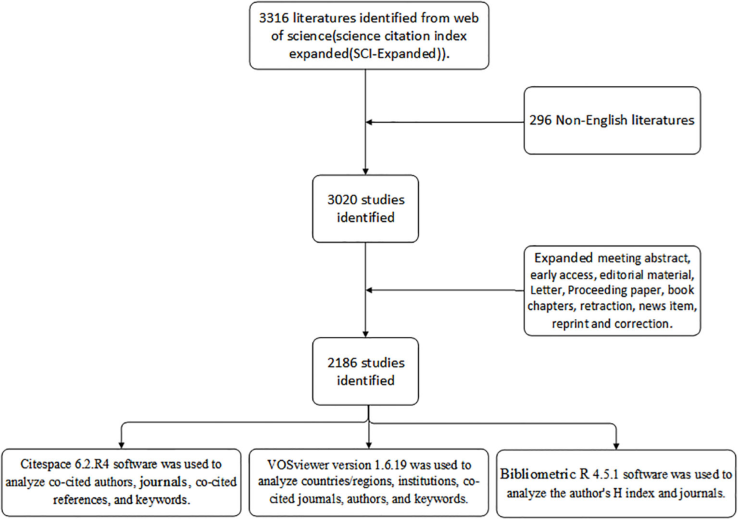
Bibliometric data were retrieved from the Science Citation Index Expanded, focusing on English-language articles published between 2004 and 2025. A specific search query was used to gather relevant literature.

How PDFdigest Helps You Understand Research

Instant Paper Analysis

Get structured summaries and key findings from dense PDFs in seconds.

Visual Explanations

Turn complex methods, figures, and results into clearer visual breakdowns.

AI-Powered Q&A

Ask focused questions and get answers grounded in the paper.

Try PDFdigest Free

Inclusion criteria

Participants in the empirical study were required to have a diagnosis of infertility, a clinically palpable varicocele, at least one abnormal semen parameter, and completion of microsurgical varicocelectomy.

Source Paper Figures and Captions
Source-paper figure
Real-world research 2.2.1 Patient data After strict screening of men diagnosed with infertility and varicocele after visiting Guangdong Provincial Reproductive Hospital (Guangdong Provincial Institute of Reproductive Sciences) from January 2023 to May 2025, we finally enrolled 113 infertile patients with varicocele hospitalized. All patients underwent surgery after signing an informed consent form. The age of onset, course of disease, and physical examinations, scrotal color Doppler ultrasound before surgery, and semen examinations before and after surgery were performed. This study was approved by the Ethics Committee of Guangdong Provincial Reproductive Science Institute (Guangdong Provincial Fertility Hospital) (Approval No. 2026 (04)).
Source-paper figure
FIGURE 1
FIGURE 1
Source-paper figure
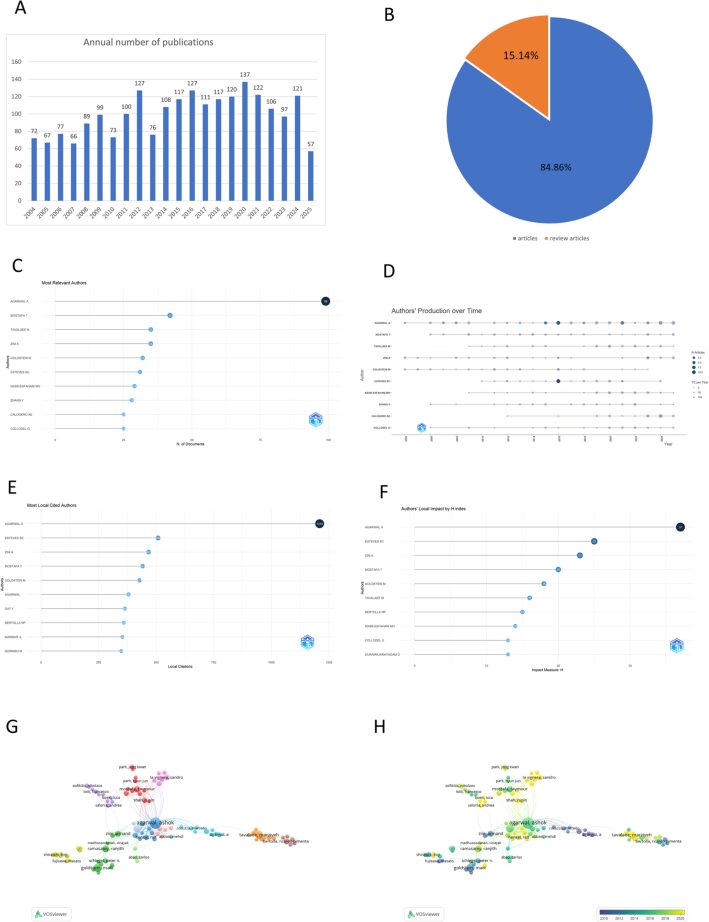
FIGURE 2 The number of publications and authors on varicocele. (A) The number of publications in every year. Only the number of articles published in the first eight months in 2025. (B) The distribution of included literature types. (C) The top 10 authors. (D) authors' production over time. (E) The cited authors. (F) The top ten authors' local impact H index. (G) The co-authorship authors network visualization. (H) The co-authorship authors overlay visualization. The thicker the line the stronger cooperation.
Source-paper figure
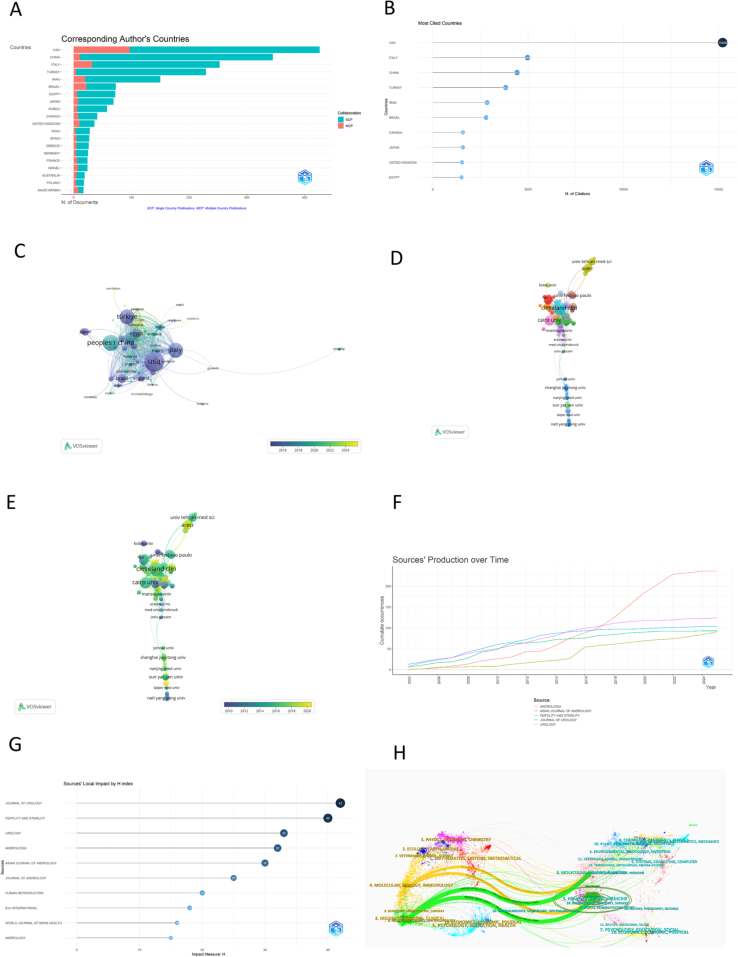
FIGURE 3 The published Countries/regionals, institutions and journals on varicocele. (A) The corresponding author's countries. (B) The most cited countries. (C) The co-authorship countries/regionals overlay visualization. (D) The co-authorship institutions network visualization. (E)The co-authorship institutions overlay visualization. (F) The top five frequency journals' production over time. (G) The journals local impact H index. (H) The journal dual-map.
Source-paper figure
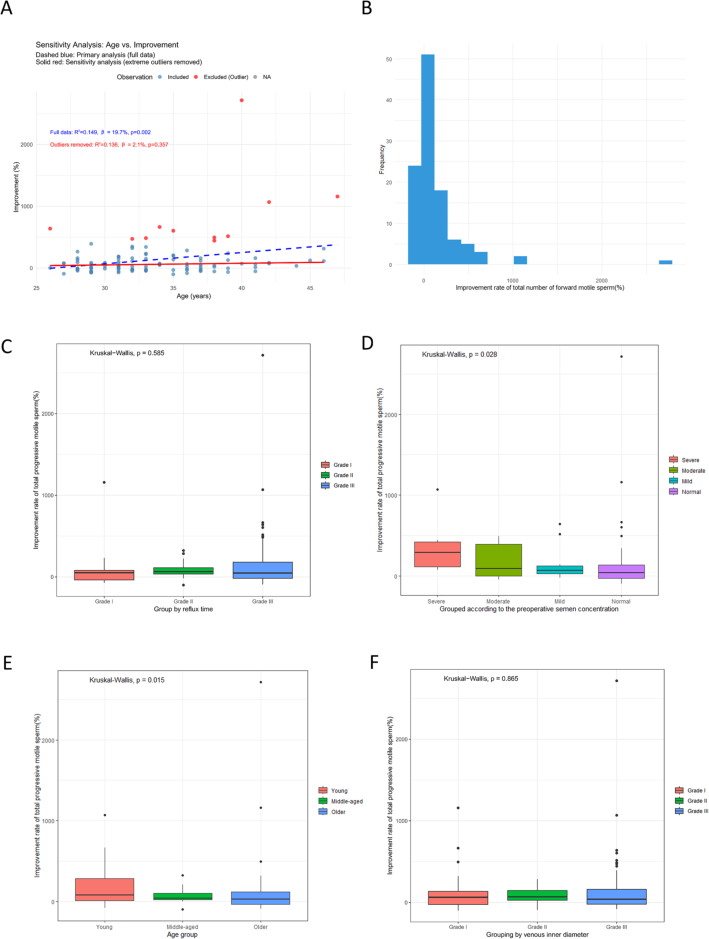
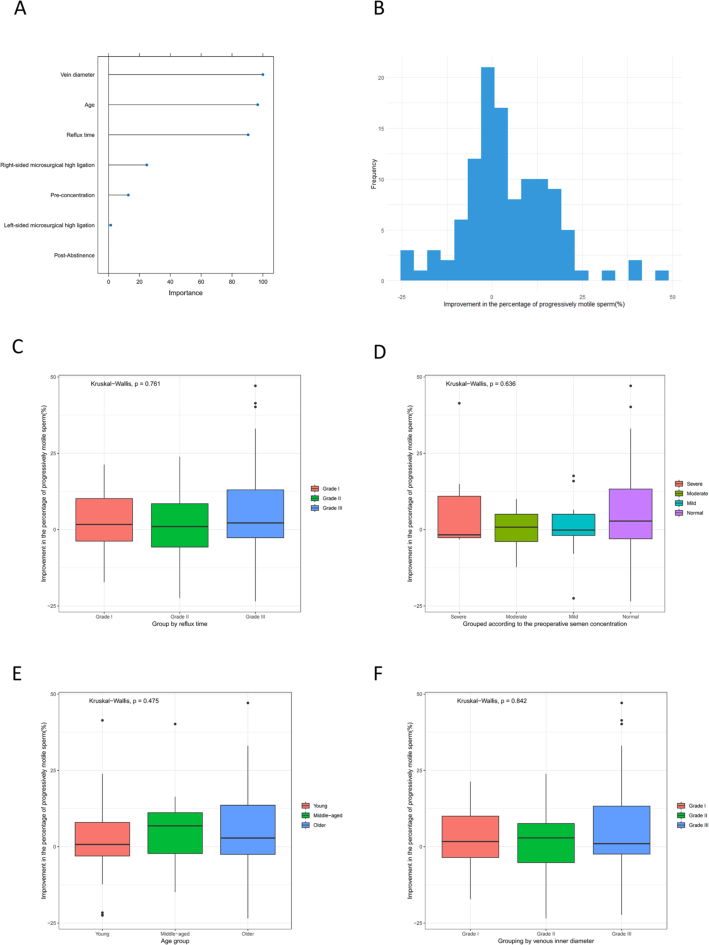
Build models to analyze the factors influencing semen quality 3.2.2.1 Build models to analyze the factors influencing the total progressively motile sperm
Source-paper figure
, but semen concentration (b = -35.800, p = 0.272), Vein Diameter (b = 19.100, p = 0.719), preoperative abstinence (b = -26.400, p = 0.219), postoperative abstinence (b = 11.100, p = 0.616), and surgical side (right: b = 618.000, p =0.075; left: b = 72.200, p = 0.311) showed no significant associations with improvement rate, as illustrated in Table
Source-paper figure
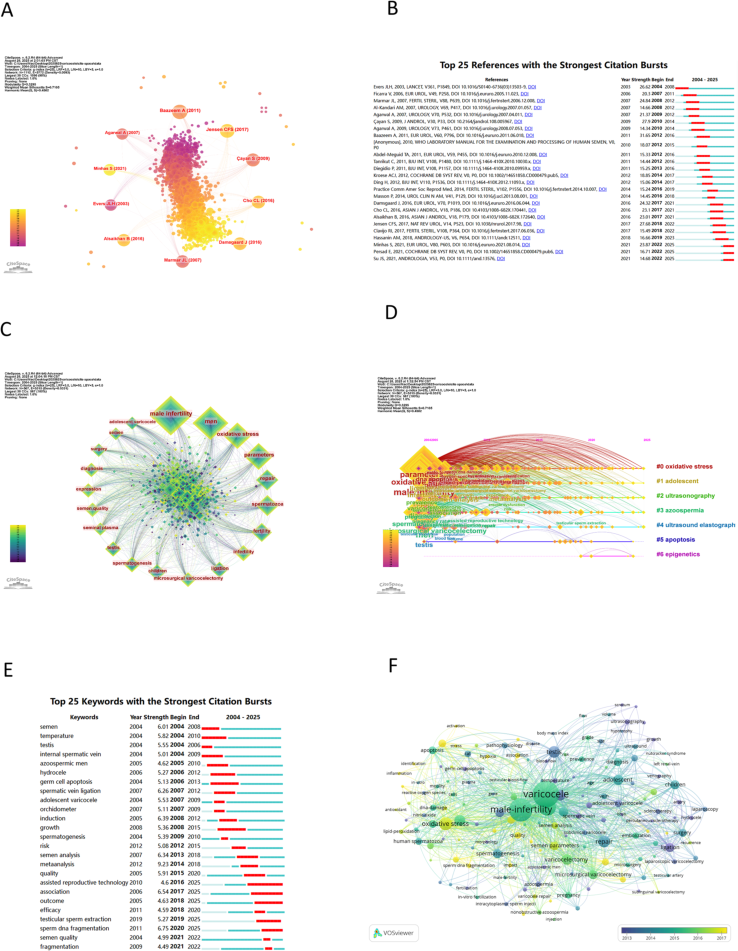
(A) The top ten co-cited references. (B) The top 25 references with the strongest citation bursts. (C) The top 20 keywords. (D) The clusters of keywords. (E) The top 25 keywords with the strongest citation bursts. (F) The keywords overlay visualization.
Source-paper figure
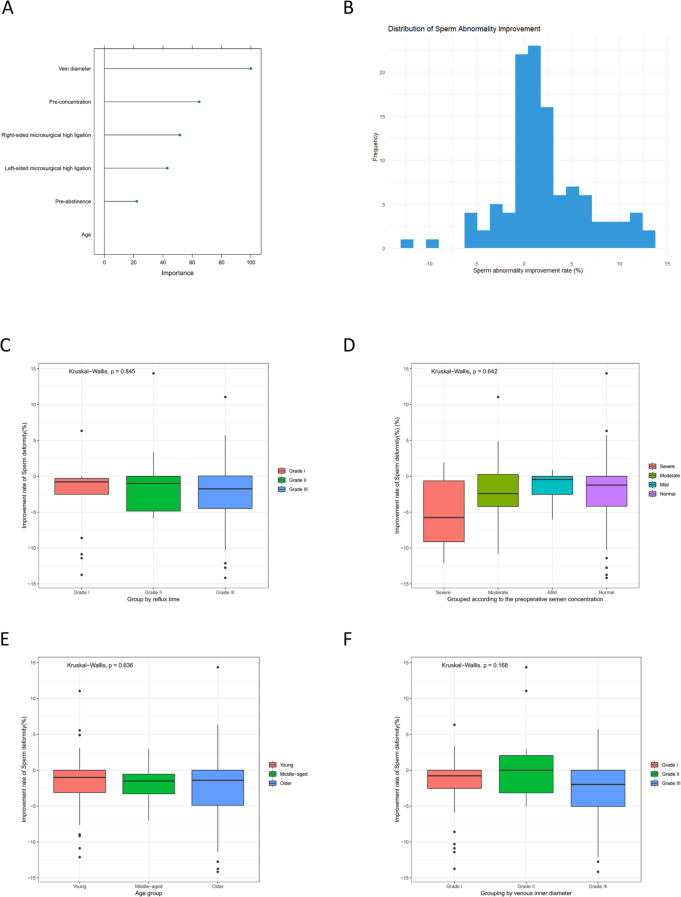
Figure 8B presents the distribution of the improvement rate.Complementing the multivariate analysis, we conducted non-parametric group comparisons using the Kruskal-Wallis test. These tests indicated that the improvement rate did not differ significantly according to reflux time (p = 0.845, Figure8C), preoperative semen concentration (p = 0.642, Figure8D), age (p = 0.636, Figure8E), or venous inner diameter (p = 0.168, Figure8F).
Source-paper figure
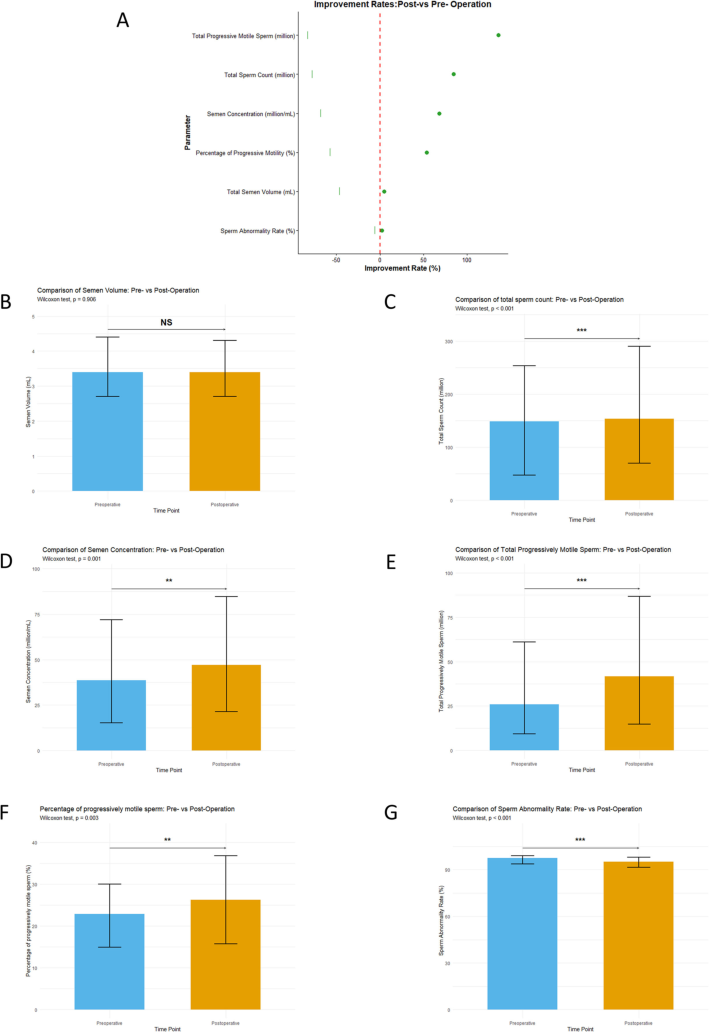
FIGURE 5 Compare Semen parameters before and after the operation. (A) The semen volume. (B) Total Sperm Count. (C) Semen Concentration. (D) Total Progressively Motile Sperm. (E) Percentage of progressively motile sperm. (F) Sperm Abnormality Rate. (G) The forest plot of the semen parameters improvement rate. (NS: p>0.05; *p< 0.05; **p< 0.01; ***p< 0.001).
PDFDIGEST AI

Struggling to understand complex research papers?

Upload any PDF and get instant AI-powered explanations, summaries, and visual breakdowns. Turn dense academic writing into clear, actionable insights.

Upload a Paper

Frequently Asked Questions

This study explores how varicocele, a common condition affecting male fertility, can be treated surgically. It combines a review of existing research with new data from patients who underwent surgery to understand better how effective these treatments are.

Varicocele is a prevalent correctable cause of male infertility, affecting 15-20% of the male population. The mechanisms linking varicocele to infertility involve various physiological factors. Despite extensive research, there is ongoing debate.

The study utilized bibliometric data from the Web of Science Core Collection, analyzing literature from 2004 to 2025. An empirical study was conducted with 113 patients undergoing microsurgical varicocelectomy, assessing semen parameters.

Yes. PDFDigest can turn this paper into a structured explanation, key takeaways, visual summaries, and a narrated video when available.